
Split Narratives
by Trista Schoonmaker
What’s In The Media?
There’s been no shortage of conflict in the media lately—both in the U.S. and around the world. And while we won’t attempt to solve global issues in this newsletter, we can look at what they reveal about how conflict works in our everyday lives.
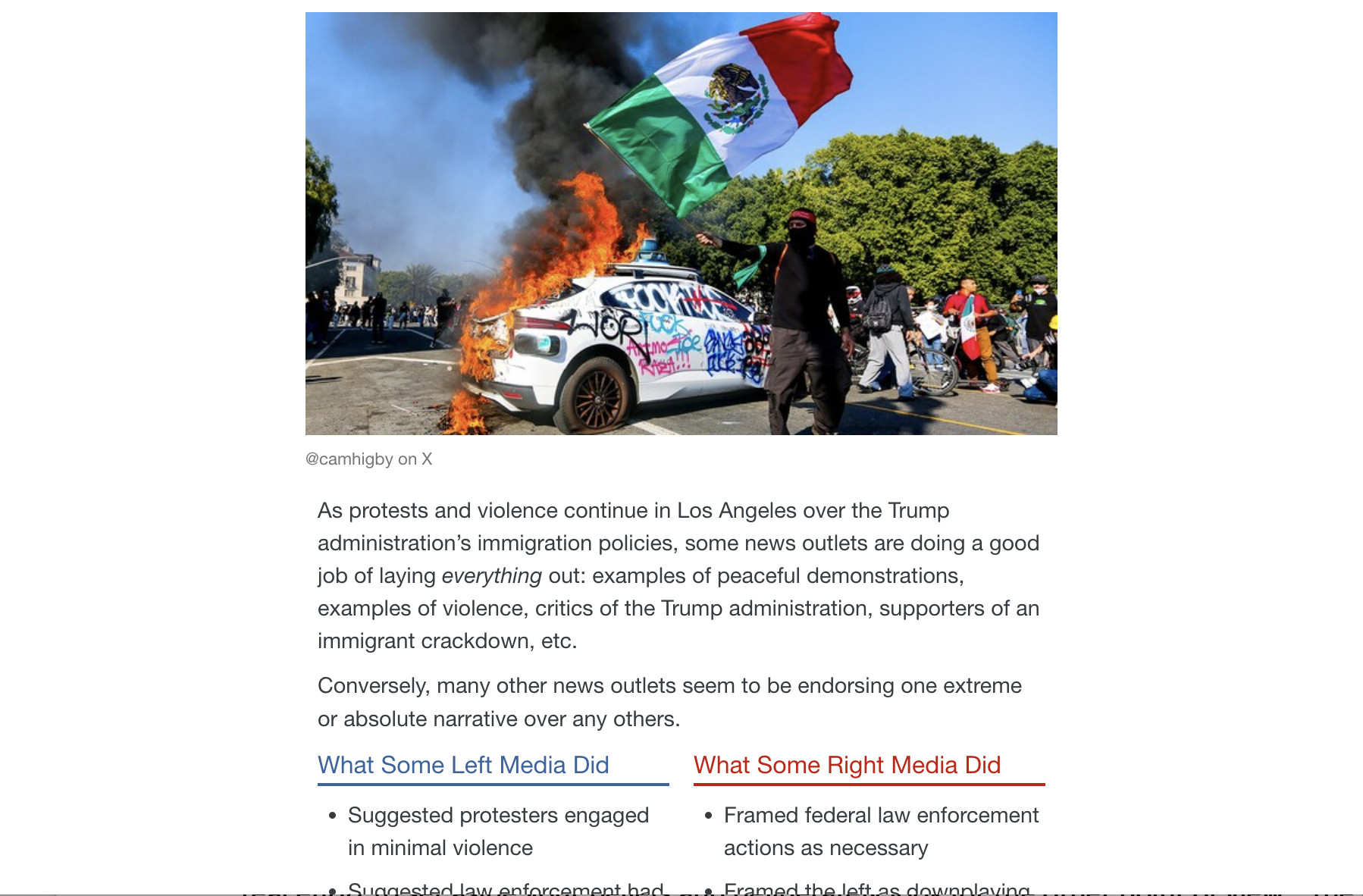
Take the media coverage of the recent LA immigration protests. The site AllSides.com analyzed how news outlets across the political spectrum reported on the same events—and the differences were striking. One article, “Split Narratives: Media Push Extreme Conclusions on LA Immigration Protests, Violence” laid out just how drastically coverage can diverge, depending on the outlet’s perspective.
This is no surprise, right? We all know this happens. But seeing it so clearly presented can still be jarring. The news you read about the events in LA probably reflected what you already believe or want to believe about the direction of the country and the specific players involved. It takes real effort to set aside your beliefs and deliberately look for the other point of view—the one your news coverage may not be presenting.
Why Is This Important?
What’s the lesson for interpersonal conflict?
The impulse is the same. In moments of conflict, our perspectives narrow. Just like biased reporting, we filter what we see through what we already believe.
Why does this happen? We’re perfectly reasonable people, and in normal circumstances, we pride ourselves on welcoming multiple perspectives. What’s going on here?
Conflict situations challenge us in a different way—they can threaten our values or even our sense of identity. When we feel that threat, the automatic impulse is to protect ourselves, to stand up for our values. We do that by getting very focused on what we believe, clarifying it and repeating it to ourselves and others. We settle into a state of certainty. And from that place, it becomes all too easy to discount all those multiple perspectives we used to embrace.
In my work, I’ve seen this countless times. A person in conflict can intellectually recognize that other perspectives exist. . .but emotionally? They resist. They don’t want to believe something that threatens their understanding of the situation—or of themselves.
So the conflict continues to spiral as both sides dig into their split narratives. Like the LA news coverage, each side tells a different version of the same story, even loses the will to recognize there might be another legitimate perspective. And connection becomes even more elusive.
How Can I Use This?
The only antidote to the perspective-narrowing that comes with conflict is to deliberately widen your view. Here are three way to do it:
• Ask “What am I missing here?” When you feel the tension rising, don’t just turn to people who see the world the same way you do—they’ll tell you what you already believe. Instead seek out views that challenge you and ask this question. Then listen with as much curiosity as you can muster.
• Say “I didn’t think about it that way.” When someone offers a different take, resist the urge to argue. Don’t jump into an explanation that will only reinforce what you already want to believe. Simply acknowledge what you’re hearing. Let you mind sit with the idea that both things might be valid at the same time.
• Name the threat: If a viewpoint feels uncomfortable, try to step outside the emotion. Ask yourself: What value of mine feels under threat? How is my identity is being challenged? How can I protect myself while still allowing for the legitimacy of multiple perspectives? Often, just naming the fear helps reduce its power—and opens the door to more productive dialogue.
There’s not much we can do to fix divisive media narratives. But in our own conversations, in the places where we have influence, we can interrupt the spiral of certainty and create space for multiple perspectives. That starts with awareness. It grows with practice. And it’s how we reduce the tension and move from conflict to connection.