
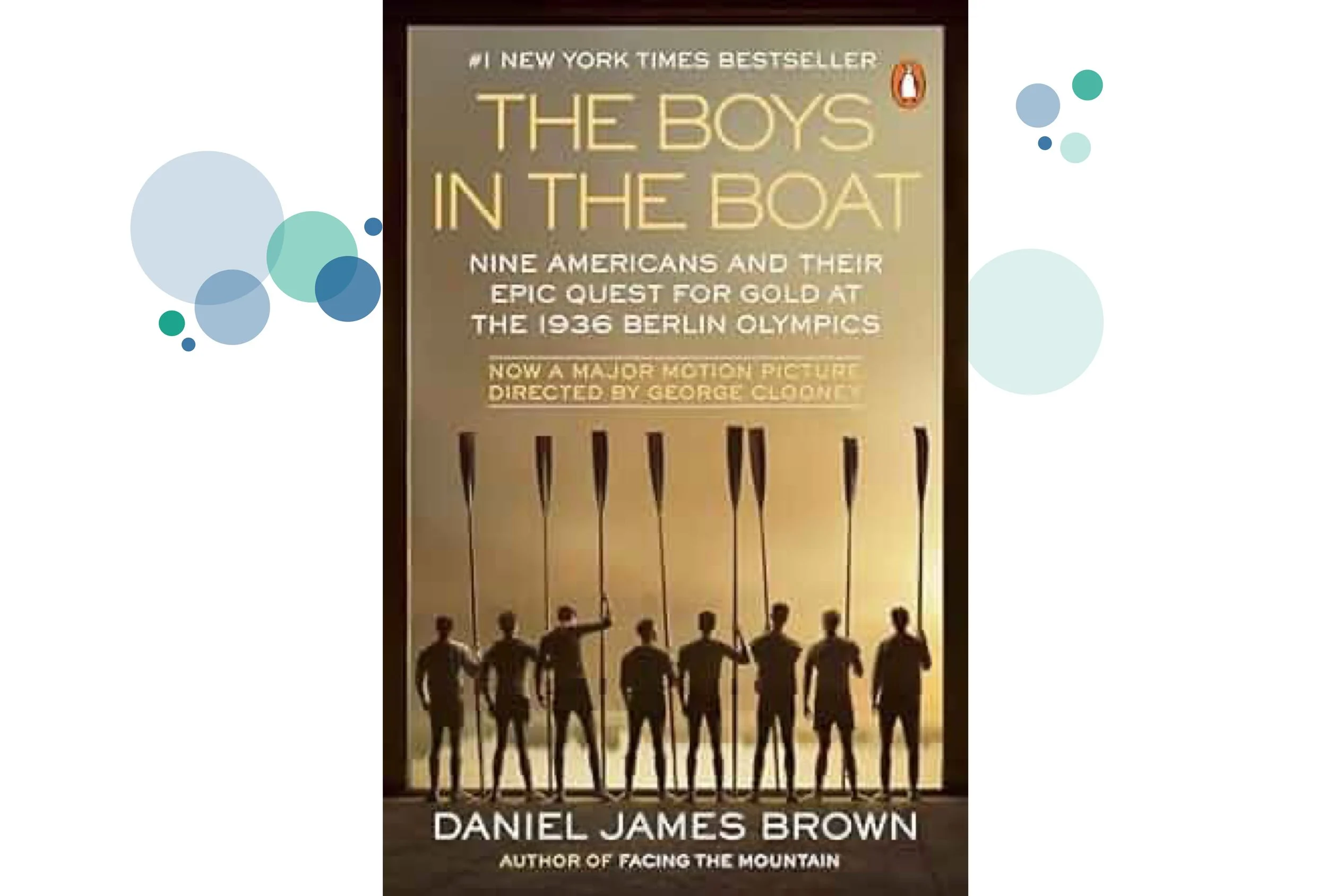
The Boys in the Boat
by Irvine Nugent
The Boys in the Boat
Book Author: Daniel James Brown
Why Does It Matter?
Daniel James Brown’s The Boys in the Boat is more than a story about rowing. It’s a masterclass in perseverance, teamwork, and overcoming conflict—both internal and interpersonal. At its core, this riveting account of the University of Washington’s 1936 Olympic rowing team is a powerful exploration of how individuals navigate personal and collective conflict on the path to greatness. It is a book that pulls you immediately into the story and I remember finding it hard to put down before reaching the end. I came away with a massive appreciation for how grueling the sport of rowing.
Set against the backdrop of the Great Depression and the rise of Nazi Germany, The Boys in the Boat follows nine working-class American boys as they pursue an unlikely dream: Olympic gold in Berlin. The narrative centers on Joe Rantz, whose life is marked by abandonment and hardship, and who must battle his own inner demons to trust others and become part of something larger than himself. But what stands out, especially through a conflict management lens, is how the team learns to transform tension into trust, and discord into cohesion.
Intrapersonal Conflict:
Joe Rantz’s internal struggle with abandonment and mistrust is perhaps the most compelling storyline. His journey reflects how unresolved personal conflict can inhibit connection and performance. His transformation—from isolated and guarded to open and collaborative—is a testament to the power of self-awareness and emotional resilience.Interpersonal Conflict:
The team faces multiple forms of interpersonal friction: class differences, communication breakdowns, and clashing personalities. One standout example is the relationship between Joe and coxswain Bobby Moch, whose leadership style challenges Joe’s need for control. Rather than allowing these tensions to derail the team, Brown shows how honest communication, shared goals, and empathy lead to resolution.Group Conflict and Trust Building:
Trust doesn’t come easy in high-stakes environments, especially when victory depends on perfect synchronicity. Brown illustrates how the boys move from mistrust and misalignment to a deep sense of unity—a process that mirrors effective conflict resolution in teams. Through practice, honest feedback, and mutual accountability, they develop the rare chemistry known in rowing as swing—when the boat moves as if propelled by a single organism.
My Key Insights
Conflict is often rooted in fear or insecurity: Joe Rantz’s internal struggle was less about others and more about his own fear of being abandoned. Until he addressed that fear, conflict persisted.
Takeaway: Help team members identify and address the underlying emotions behind their resistance or withdrawal.
Shared purpose reduces personal friction: When the rowers focused on winning as a team—not as individuals—their conflicts gave way to cooperation.
Takeaway: Clarify and center shared goals during conflict to shift the focus from “me vs. you” to “us vs. the challenge.”
Good communication is technical and emotional: The crew had to master both the rhythm of the oars and the rhythm of relationships—listening, trusting, and adjusting.
Takeaway: Build strong communication habits that include both clarity (task focus) and empathy (relationship focus).
Conflict doesn’t disappear—it’s managed: Even championship teams have tension. What matters is how they work through it.
Takeaway: Normalize conflict as part of team growth, and equip teams with tools to name, explore, and resolve it constructively.
How Can I Use This?
1. Spot the Signs of Hidden Conflict: If someone on your team seems disengaged, withdrawn, or frequently misunderstood, it could be a sign they’re feeling excluded—not just unmotivated. Use this data as a reminder to look beneath the surface and ask, “Is there a conversation that’s not happening?”
2. Lead with Psychological Safety: Create space where people feel safe to speak up, disagree, and be themselves. You can do this by modeling vulnerability, welcoming different perspectives, and responding with curiosity instead of judgment when conflict arises.
3. Advocate for Conflict Literacy in Your Organization: Use these insights to start conversations with HR, or leadership about incorporating conflict management into professional development strategies. Share that conflict resolution and active listening aren’t “nice-to-haves”—they’re essential for retention, engagement, and innovation.
When you treat conflict management as a key skill, you don’t just avoid tension—you build trust. And trust is the foundation for better teams, healthier relationships, and more human-centered leadership.