
The Culture Map
by Trista Schoonmaker
The Culture Map
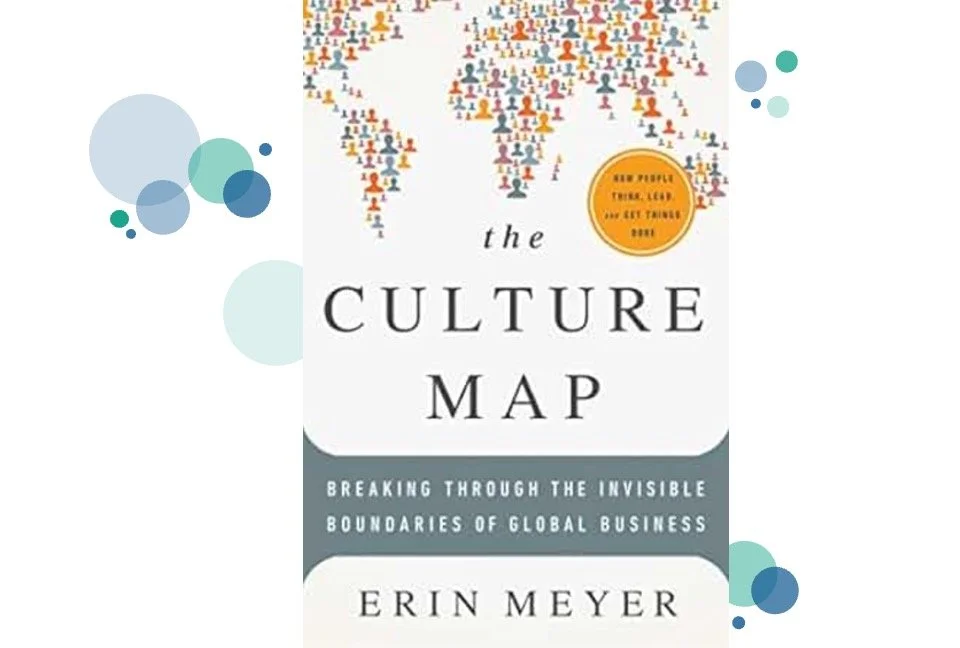
Book Author: Erin Meyer
Why Does It Matter?
How much interpersonal conflict in the workplace is caused not by disrespect but by cultural misunderstandings? More than we often realize.
While I don’t regularly work with international teams, some of my clients do. I recommend a range of resources, but my go-to has become The Culture Map and the accompanying tools on Erin Meyer’s website.
This book introduces a framework for understanding the most common cross-cultural business communication challenges and offers strategies for navigating them more effectively. It’s rich with real-world examples and stories that bring each of the eight dimensions to life. The writing is engaging and practical—ideal for anyone who needs to bridge communication gaps without making assumptions about intent.
Even if you don’t consider yourself a “global” leader, chances are you’re still navigating cultural differences, whether across regions, generations, or organizational subcultures. Meyer’s framework doesn’t just apply to international teams—it’s relevant for any leader trying to create more inclusive, effective collaboration.
My Key Insights
Here are a couple of insights that stood out to me.
Low-context vs. high-context communication: One of the most striking dimensions is how cultures differ in the way they communicate meaning.
Low-context cultures (like the U.S., Germany, the Netherlands, and Australia) value clarity, directness, and explicit expression. In these settings, “what you say is what you mean.” The burden is on the speaker to be clear, precise, and thorough. Silence is often uncomfortable, and ambiguity is avoided.
High-context cultures (like Japan, China, Korea, and many Arab cultures) rely more heavily on shared assumptions, body language, tone, and social context. Meaning is embedded in the setting, the relationship, and what is not The burden is on the listener to read between the lines and interpret nuances correctly.
Can you see already where misunderstandings can arise? Learning to normalize and talk about these differences helps teams work past those frustrations.
Task-based vs. relationship-based trust: Trust is built in two distinct ways across cultures, and misalignment here can lead to deep frustration.
In task-based trust cultures, such as those in the United States, Germany, and Australia, trust is built primarily through professional performance. People tend to develop confidence in one another based on competence, reliability, and results. If you do high-quality work, meet deadlines, and follow through on commitments, you’re seen as trustworthy—regardless of how well you know the other person personally.
In relationship-based trust cultures, such as those found in Brazil, China, and many parts of the Middle East and Africa, trust is built through personal connection rather than just performance. Shared meals, informal conversations, and time spent getting to know each other are not just social niceties—they are essential steps in establishing credibility. In these environments, trust develops more slowly, but once it’s established, it tends to be deep and enduring.
How Can I Use This?
The most powerful way to use this book is to shift how you interpret “challenging behavior.” What seems “difficult” may actually be a cultural norm. For example, if you find yourself frustrated by a colleague’s indirectness, The Culture Map helps you reframe it—not as evasiveness, but as a culturally appropriate way of communicating. That shift in perspective can help you respond more thoughtfully rather than reacting from annoyance.
Once you have a background on the eight dimensions, head over to the website (www.erinmeyer.com/tools/) to put it into action. You can map your own cultural profile, compare it with other countries, and even visualize differences across your entire team. It’s an powerful way to spark dialogue, build self-awareness, and adapt your leadership style to better connect across cultures.
I enjoy facilitating this experience with teams—it’s eye-opening every time. Get ready to expand your perspective in ways that matter.