
Say Nothing
by Irvine Nugent
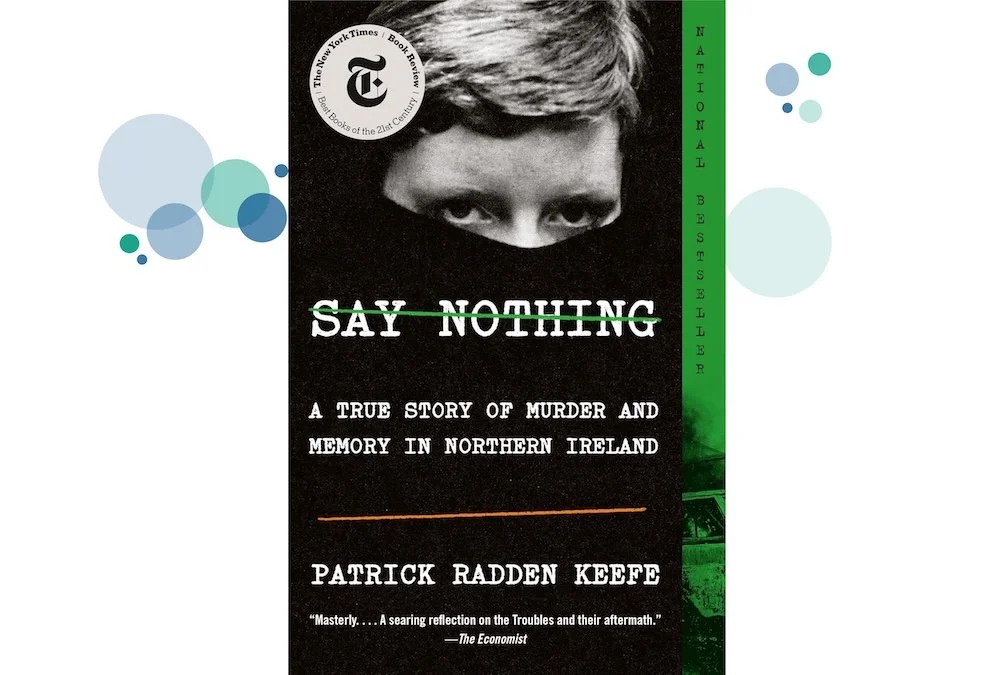
Say Nothing: A True Story of Murder and Memory in Northern Ireland
Book Author: Patrick Radden Keefe
I am a child of the troubles. I grew up in the conflict of Northern Ireland. People often asked me if there was one book they could read that would help them understand the conflict. For me it is Say Nothing by Patrick Radden Keefe
Say Nothing is a gripping, meticulously researched nonfiction narrative that delves into the dark and deeply personal complexities of the Troubles in Northern Ireland—a decades-long conflict marked by violence, sectarian divisions, and political unrest. At the heart of the book is the haunting story of Jean McConville, a Catholic widow and mother of ten, who was abducted from her home in Belfast in 1972 by the Irish Republican Army (IRA), accused of being an informant. Her disappearance became one of the most infamous and enduring mysteries of the conflict, only fully understood decades later.
Author Patrick Radden Keefe skillfully unravels the political and personal forces that led to McConville’s murder, using her case as a lens through which to examine the broader human cost of the Troubles. He explores how individuals justify violence in service of a cause, how memory and denial shape identity, and how unresolved trauma continues to echo across generations.
Beneath the political intrigue and historical detail lies a deeper narrative: Say Nothing is ultimately a meditation on the emotional toll of conflict, the corrosive effects of secrecy, and the silence that survivors often carry. It reveals how people suppress truth—not only from others, but from themselves—in order to cope, conform, or protect what they believe in. It’s a story about loyalty and betrayal, justice and impunity, and the moral ambiguity that often accompanies even the most fervent convictions.
At its core, Say Nothing is not just about war or politics—it’s about the psychological aftermath of conflict, the fractured relationships it leaves behind, and the stories we refuse to tell in order to survive. It is a powerful reminder that and that healing from conflict requires not just peace, but truth.
My Key Insights
The Cost of Suppressed Truths: The title Say Nothing is drawn from a poem by Seamus Heaney, and it captures the pervasive culture of silence during the Troubles. People withheld the truth—not only from others, but often from themselves—to protect their families, preserve their reputations, or safeguard the cause. Speaking out could lead to ostracism, danger, or death. Yet this enforced silence did not erase the pain—it merely buried it.
Identity and Loyalty: Throughout the book, characters struggle with conflicting loyalties—to their families, to the IRA, to the Catholic community, and to their own conscience. These tensions were not easily resolved, and they often led to personal turmoil, guilt, or radicalization. Loyalty was both a moral compass and a weapon, used to justify betrayal or demand silence.
The Legacy of Unresolved Conflict: Though the Good Friday Agreement formally ended much of the violence in Northern Ireland, Say Nothing reveals how the emotional and psychological wounds remain unhealed. Decades later, families still seek answers. Veterans live with trauma. Former allies cannot look each other in the eye. The past is never really past—it lives in memory, silence, and resentment.
Narrative and Memory: In Say Nothing, the stories people told—both publicly and privately—shaped their actions, identities, and the way history was recorded. Dolours Price told her story in a way that sought justice and vindication; Gerry Adams, by contrast, denied his past affiliation. Each narrative served a purpose, but the absence of shared truth left a fragmented collective memory.
How Can I Use This?
The Cost of Suppressed Truths: In many organizations, a similar dynamic plays out. Employees may withhold concerns, feedback, or dissenting opinions for fear of retaliation or social exclusion. Leaders may ignore early warning signs of dysfunction to maintain the appearance of harmony. However, silence is not neutrality—it is complicity. Conflict practitioners must create environments where truth-telling is safe, even when it is uncomfortable. Psychological safety, structured dialogue, and consistent follow-through are essential tools for encouraging open communication and breaking cycles of silence.
Identity and Loyalty: In the workplace, individuals often face competing loyalties as well—between colleagues and supervisors, between team norms and company values, or between personal ethics and institutional goals. Conflict resolution must take these hidden dynamics into account. Practitioners can help individuals surface these inner conflicts by asking reflective questions: “What values are you trying to uphold?” or “Who do you feel you’re letting down in this situation?” Acknowledging these tensions allows for more compassionate, nuanced solutions.
The Legacy of Unresolved Conflict: Organizations often assume that once an issue is off the radar, it’s resolved. But unresolved conflict leaves a residue. It resurfaces as passive-aggression, disengagement, or turnover. The longer it goes unaddressed, the harder it becomes to untangle. Leaders must be proactive in revisiting past breakdowns, especially after major reorganizations, layoffs, or leadership transitions. Conflict audits, cultural assessments, and facilitated “clean-up” conversations can help acknowledge what’s been left unsaid and reset trust before it deteriorates further.
Narrative and Memory: In any conflict, each party holds a different version of what happened. These narratives aren’t just facts—they’re emotionally charged stories rooted in identity, intent, and meaning. Effective conflict management involves helping people share, hear, and validate these narratives without needing to fully agree on them. Tools like narrative mediation, timeline exercises, or structured storytelling can help parties uncover common ground while respecting difference. Ultimately, healing often begins when people feel that their version of events has been heard—whether or not it becomes the official version.