Comparison Articles
Choosing the right approach to conflict often begins with understanding the differences between similar concepts. These comparison articles explore how common conflict, leadership, communication, and emotional intelligence models relate to one another and when each is most useful.
What You'll Learn
These articles compare related concepts, frameworks, and approaches to help you understand their similarities, differences, strengths, limitations, and practical applications in the workplace.
Articles in This Topic
Explore the articles below to deepen your understanding of conflict and its practical application in the workplace.
Leadership under pressure relies on many of the same capabilities used in calm conditions, but greater emotional, cognitive, and relational load can change how readily leaders access those capabilities. Understanding the difference helps leaders prepare for difficult decisions, conversations, and relationships.
Workplace conflict and interpersonal conflict overlap, but they are not the same. Workplace conflict may arise from roles, resources, decisions, goals, systems, or relationships; interpersonal conflict specifically centers on tension between people.
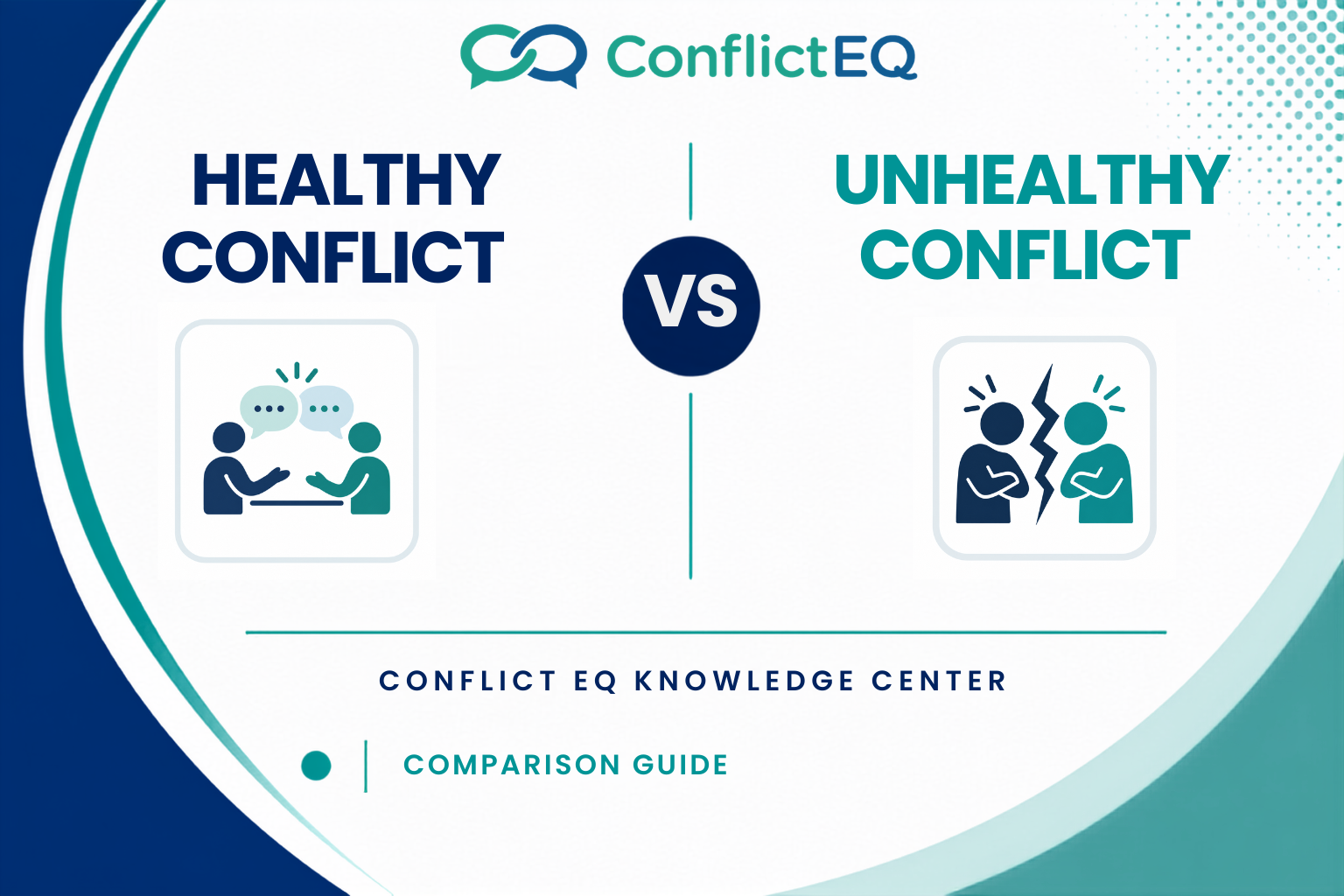
Healthy conflict can surface useful differences, improve decisions, and clarify expectations. Unhealthy conflict narrows communication, damages trust, and makes collaboration harder. Learn how to recognize the difference and what leaders can do when conflict begins to shift.
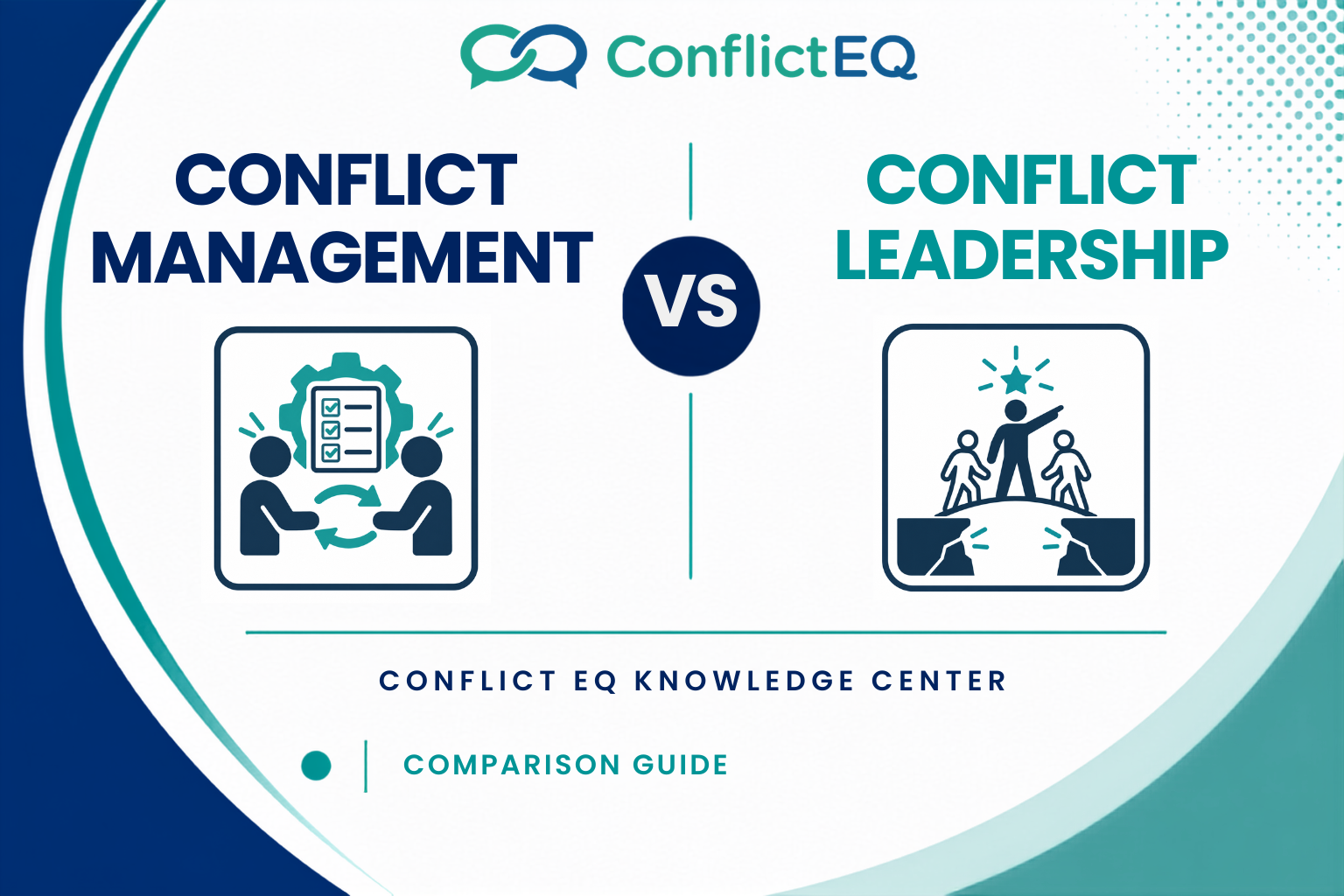
Conflict management focuses on handling conflict effectively. Conflict leadership asks a broader question: how leaders shape the conditions, responses, and systems around conflict. Learn where the two approaches overlap—and where they differ.
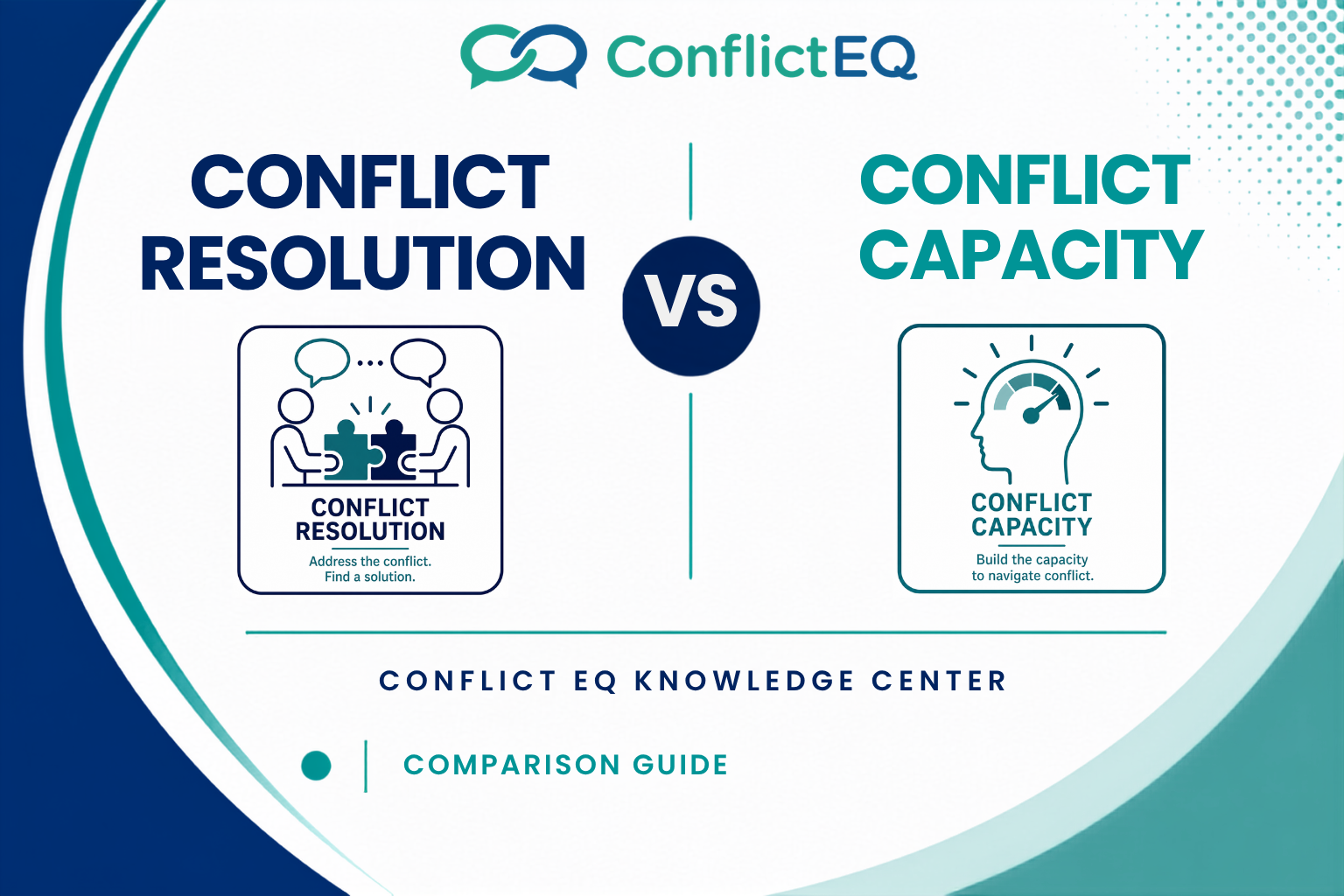
Conflict resolution explains ways to address conflict. Conflict Capacity examines whether people can remain constructive enough to use those approaches when pressure rises. Explore the difference and why leaders need both.
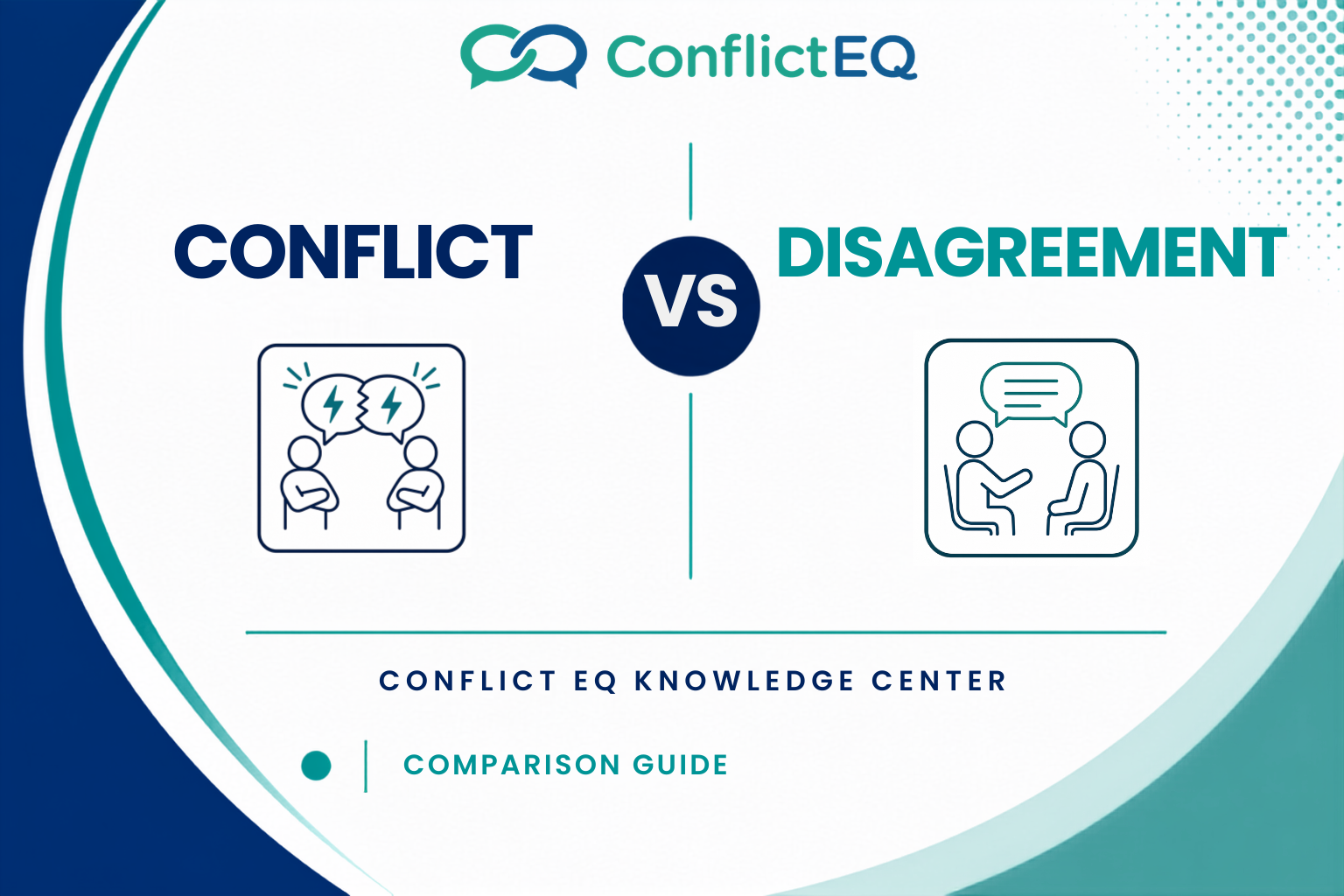
Understand the difference between Conflict and Disagreement, where each is useful, and what the distinction means for navigating workplace conflict more effectively.