

Conflict EQ™: A Leadership Capacity

What Is Conflict EQ?

Conflict EQ is a leadership capacity that helps individuals and teams navigate conflict, tension, and difficult conversations without avoidance, escalation, or damage to trust.
It applies directly to workplace conflict, difficult conversations, and moments of leadership tension where relationships and results are both at stake. Rather than treating conflict as a problem to fix, Conflict EQ focuses on how leaders show up when disagreement is present—especially when emotions are high and pressure is real.
Conflict is not a breakdown of leadership. It’s a condition of leadership and teamwork. Wherever people care, disagree, or hold different perspectives, tension will arise.
Most organizations don’t have a conflict problem—they have a capacity problem. Leaders lack the capacity to stay grounded, curious, and clear when tension increases.

Conflict EQ is a Leadership Capacity
Conflict EQ is not a script, personality profile, or conflict resolution technique. It is a leadership capacity — the ability to remain regulated, thoughtful, and effective while conflict is happening.
Leaders with strong Conflict EQ are able to:
stay regulated under pressure
engage disagreement without shutting down or escalating
remain open when it would be easier to defend
move difficult conversations forward without losing connection
This capacity develops over time through reflection, practice, and real-world application in active leadership situations. It is strengthened through leadership development experiences that deliberately engage real tension—not through one-time workshops alone.
The Conflict EQ Bridge

Conflict EQ is less about fixing disagreement and more about building something leaders can stand on when tension rises.
When conflict emerges, leaders often find themselves on opposite sides of a gap—shaped by differing perspectives, priorities, emotions, or assumptions.
Conflict EQ acts like a bridge.
It creates a way across difference—connecting perspectives, emotions, and interests that might otherwise remain separated. Without that structure, leaders tend to avoid the crossing, rush it, or escalate defensively.
Conflict EQ provides structure beneath the crossing, helping leaders:
Create stable footing: regulate their emotions and clarify what is actually happening.
Strengthen both sides: acknowledge perspectives and emotions without collapsing into them.
Span the gap: engage disagreement directly, without escalation or withdrawal.
Maintain the bridge: continue conversations in ways that build trust rather than erode it.
The bridge is not about agreement.
It’s about connection strong enough to hold difference.
How Conflict EQ Differs from Other Approaches
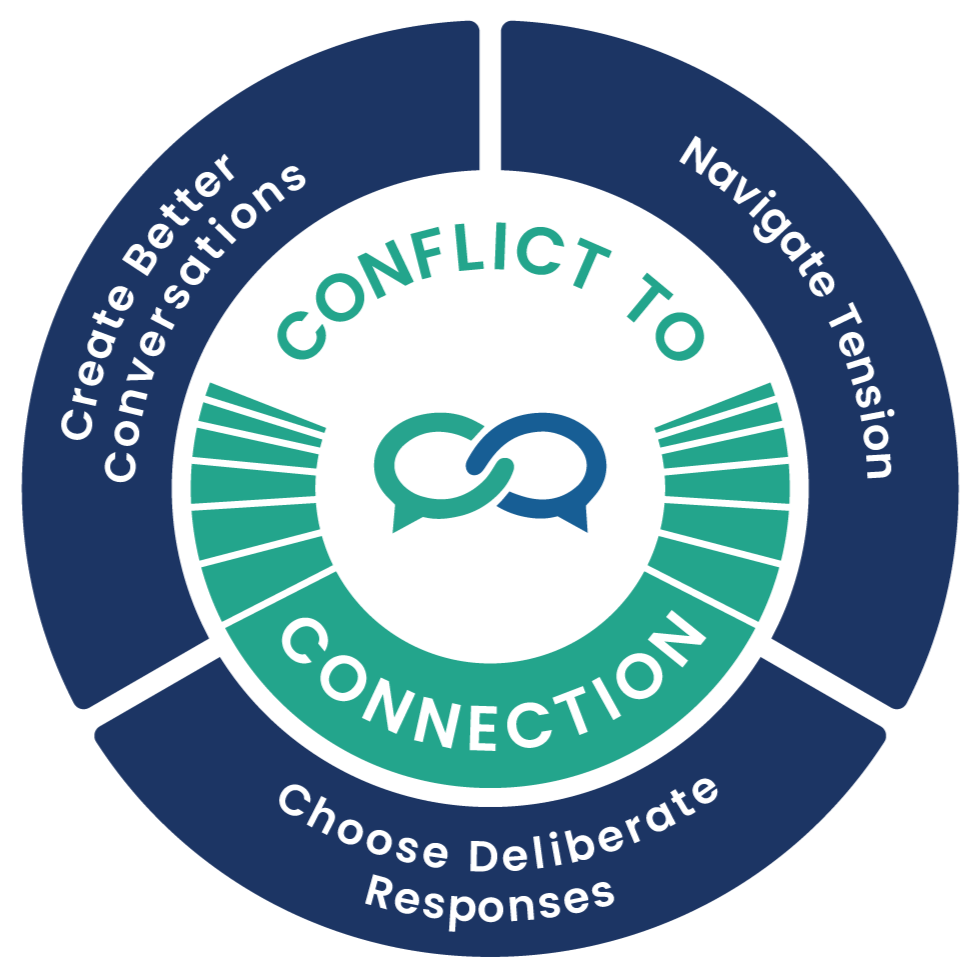
Conflict EQ belongs in the broader field of leadership development, but it serves a distinct purpose.
Conflict resolution focuses on settling disputes after escalation.
Mediation relies on third parties to resolve disagreement.
Communication training teaches techniques or scripts.
Emotional intelligence develops awareness and regulation more broadly.
Conflict EQ strengthens the leadership capacity needed before, during, and after workplace conflict — so leaders can engage difficult conversations themselves rather than outsourcing them once damage has occurred.
It complements these approaches by focusing specifically on how leaders engage disagreement in real time.

What does Conflict EQ look like in practice?
Leaders with strong Conflict EQ often describe:
greater composure under pressure
clearer, more direct conversations
less emotional drain from ongoing tension
increased confidence engaging across differences
faster recovery after strained conversations
Conflict doesn’t disappear.
It becomes usable instead of destructive.

How Conflict EQ is Built

Conflict EQ is built through intentional experiences that engage real leadership tension—rather than avoiding it or discussing it only in calm moments.
This work may include:
Training that allows leaders to practice staying grounded when disagreement is present.
Coaching that supports reflection and application in leadership real situations.
Team experiences that build shared language and trust around tension.
Assessments that surface how conflict is currently being experienced.
The mechanism of change is simple but demanding: leaders practice engaging tension while supported, reflect on what happens internally and relationally, and apply that learning in real situations. Over time, capacity increases.
The goal is not to eliminate discomfort, but to build the capacity to work with it productively, so leaders have access to clarity and choice when it matters most.
Conflict EQ in Organizations
When Conflict is Active
Leaders receive support stabilizing difficult situations and engaging disagreement without escalation.
Before Conflict is a Pattern
Organizations invest in building conflict capacity early through training and coaching.
Both paths are grounded in the same belief: conflict is not the failure—losing the capacity to stay human under pressure is.
Conflict EQ doesn’t promise less conflict. It promises less damage.
Start with Awareness
The first step in building Conflict EQ is understanding how conflict is currently impacting your leadership or team dynamics.
The Impacts of Conflict Snapshot is a short assessment designed to help leaders understand how conflict is currently impacting you and a team you work with.