Conflict Styles & Behaviors
People respond to conflict in different ways. These articles explore common conflict styles, behavioral patterns, emotional responses, and how understanding these differences leads to more effective communication and stronger relationships.
What You'll Learn
These articles examine conflict styles, behavioral tendencies, emotional triggers, and common patterns of response, helping you recognize both your own approach to conflict and the approaches of others.
Articles in This Topic
Explore the articles below to deepen your understanding of conflict and its practical application in the workplace.
Conflict habits are familiar patterns of responding when disagreement becomes uncomfortable. Changing them requires recognizing the situations that activate them, understanding what the habits accomplish, and practicing alternative responses until greater flexibility becomes possible.
Fawn describes a pattern of appeasing or over-accommodating others when conflict feels threatening. It may reduce immediate tension while leaving personal needs, boundaries, and important workplace concerns unaddressed.
The freeze response can make it difficult to think, speak, decide, or act when conflict feels threatening. Learn how it can appear at work and what can help restore enough capacity for constructive action.
The flight response is a protective pattern that moves away from perceived threat. In workplace conflict, it can appear as avoidance, withdrawal, delay, distraction, or leaving difficult issues unaddressed. Learn what drives it and how Conflict EQ helps people respond more deliberately.
The fight response is not limited to anger or aggression. In workplace conflict, it can appear as arguing harder, interrupting, controlling, defending, or pushing for immediate resolution. Learn what drives it and how Conflict EQ helps people respond more deliberately.
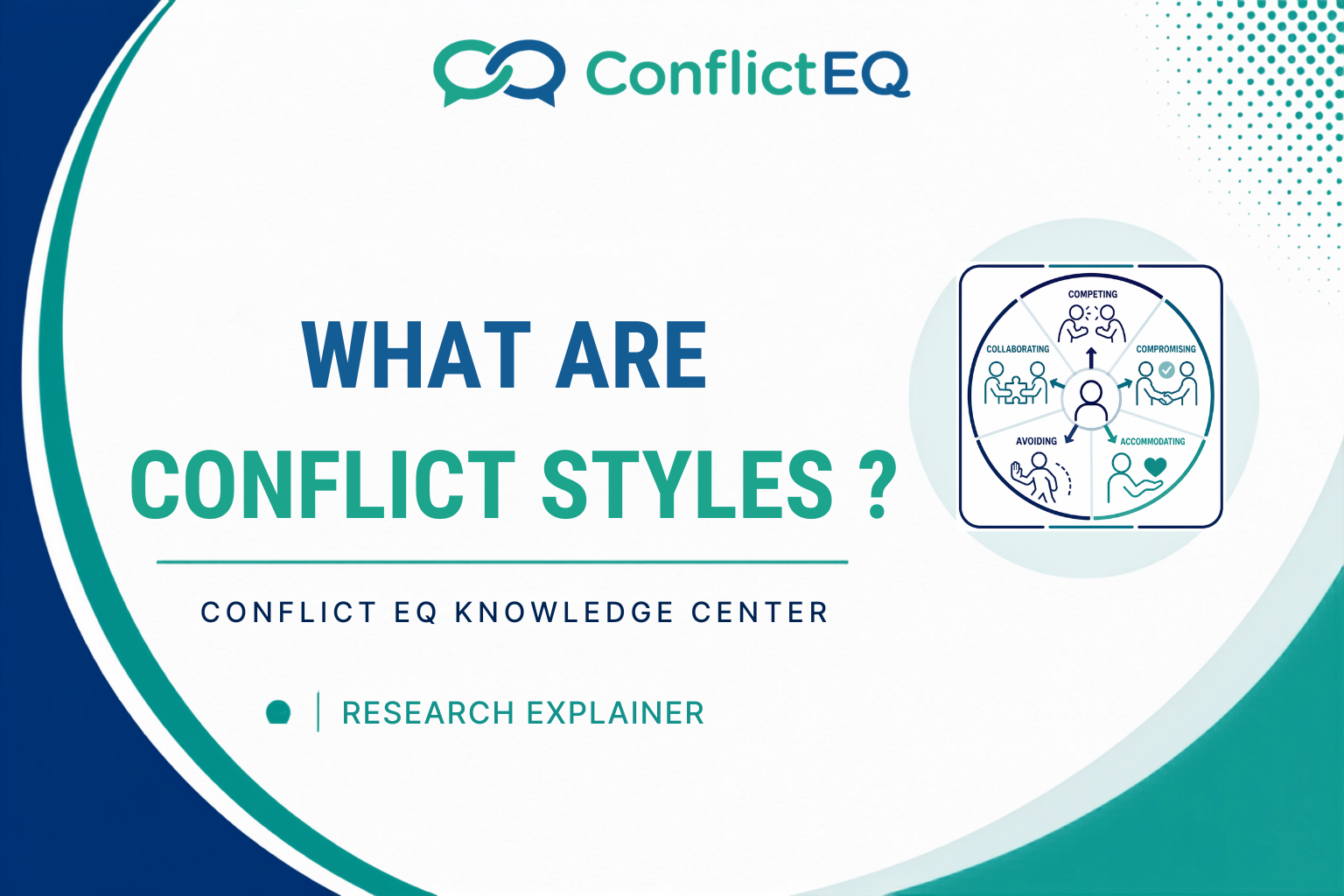
Explore the five common conflict styles—competing, collaborating, compromising, avoiding, and accommodating—and learn why effective conflict requires flexibility rather than one ideal style.
Explore why do people react differently during conflict, the factors that drive this pattern, and what research and Conflict EQ® suggest about responding more constructively.