
The Beekeeper of Aleppo
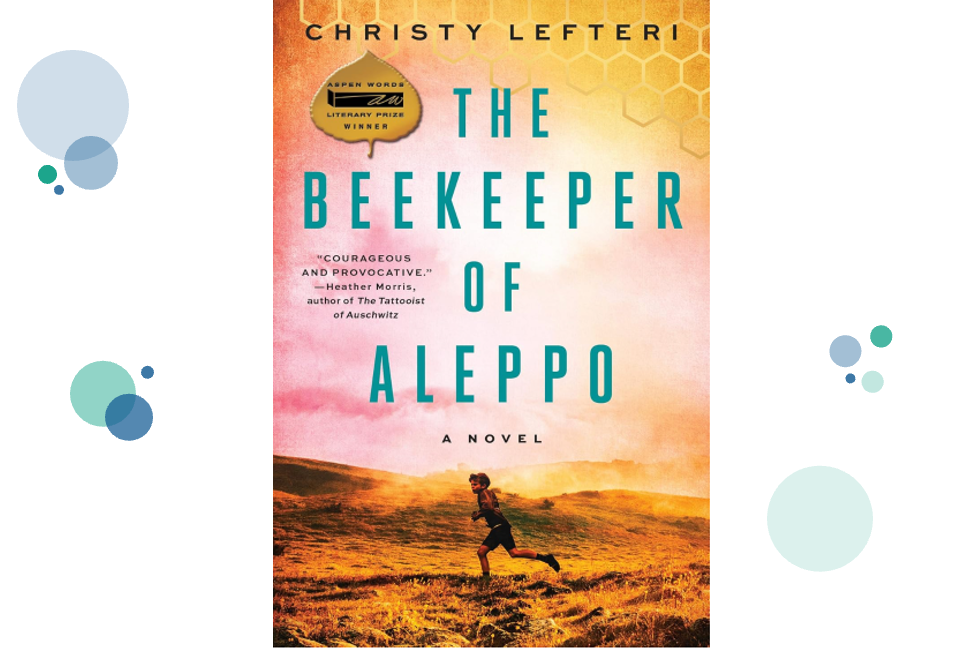
by Irvine Nugent
Book Author: Christy Leferti
Some books stay with you because of how they make you feel. The Beekeeper of Aleppo is one of those books.
It tells the story of Nuri, a beekeeper, and his wife Afra, an artist, whose lives are shattered by war in Syria. Forced to flee their home, what unfolds isn’t just a story about refugees—it’s a story about loss, love, trauma, and the fragile resilience of the human spirit.
Reading it, I found myself reflecting on how people carry invisible pain. In my work with leaders and teams, I often see similar dynamics—different scale, same truth. We rarely see the full story of what someone has endured. We just see the behaviors that surface: withdrawal, defensiveness, or silence.
This novel is a powerful reminder that empathy begins when we stop judging what we see and start wondering what lies beneath.
Four insights jumped out at me
1. Healing begins when stories are spoken.
Nuri’s healing begins not in escape, but in expression. As he slowly begins to tell his story—to name his loss, his fear, his guilt—he reconnects to life.
That’s what happens in conflict resolution too. People don’t heal just because a problem is “solved.” They heal when they feel heard. Creating space for people to share their story—without interruption or defense—is one of the simplest and most powerful tools of emotional repair.
2. Empathy thrives where judgment ends.
Lefteri never lets us forget that behind every statistic is a human being with a story. That’s equally true in the workplace. Every conflict hides a story of values, fears, or unmet needs. Emotional intelligence asks us to trade judgment for curiosity: “What might be true for this person that I don’t yet understand?”
When we lead from empathy rather than ego, trust begins to rebuild—even in the hardest situations.
3. Invite stories, not just solutions.
When conflict arises, resist the urge to “fix” it immediately. Instead, ask each person to share what the situation has been like for them. As Nuri learned, telling the story is part of healing. For teams, it’s part of rebuilding trust.
4. Remember that healing isn’t linear.
In the novel, recovery comes in waves—progress, setback, and progress again. The same is true for emotional growth. As leaders, we can normalize that. We can say, “It’s okay that this still hurts. We’re still working through it.” That honesty builds psychological safety.
There’s a line in the book that I kept coming back to:
“Where there are bees, there are flowers, and wherever there are flowers, there is new life and hope.”
It’s a simple truth, but a profound one. Even in devastation, life finds a way. The same is true in our relationships, our teams, and our conflicts. Beneath the rubble of misunderstanding and pain, something living still waits to emerge.
Our job—whether as leaders, friends, or human beings—is to create the conditions where that life can grow again.
Questions Leaders Ask
In this week's Book Insights, we explore lessons from The Beekeeper of Aleppo. While the novel tells the story of displacement, loss, and resilience, it also offers powerful insights about empathy, healing, leadership, and the hidden experiences that shape how people show up in relationships and organizations.
Why is empathy important in leadership?
Empathy helps leaders understand the experiences, emotions, and perspectives of others. When leaders approach situations with curiosity rather than judgment, they create stronger relationships, improve communication, and build trust. Empathy allows leaders to see beyond behavior and consider the circumstances influencing it.
Why do people sometimes withdraw, become defensive, or remain silent?
Behavior is often influenced by experiences that others cannot see. Stress, uncertainty, grief, trauma, fear, and emotional exhaustion can affect how people communicate and engage with others. What appears on the surface may be only a small part of a much larger story.
What does it mean to listen to someone's story?
Listening to someone's story means creating space for them to share their experiences without interruption, judgment, or immediate problem-solving. Often people do not need solutions first; they need understanding. Being heard can be an important step in rebuilding trust, connection, and emotional safety.
How does storytelling support healing?
Storytelling helps people make sense of difficult experiences. Naming emotions, experiences, and challenges can reduce isolation and create opportunities for understanding. In both personal relationships and workplace conflicts, the ability to tell one's story often contributes to healing and reconciliation.
Why do leaders sometimes rush to solve problems too quickly?
Many leaders are trained to focus on solutions, efficiency, and action. While those skills are valuable, moving too quickly to solutions can unintentionally overlook the emotional realities people are experiencing. Understanding often needs to come before problem-solving if meaningful progress is going to occur.
What is psychological safety?
Psychological safety is the belief that people can speak honestly, share concerns, admit mistakes, ask questions, and express difficult emotions without fear of humiliation or punishment. Teams with high psychological safety are more likely to learn, adapt, collaborate, and navigate conflict effectively.
Why is healing rarely a straight line?
Growth and recovery often occur through cycles of progress, setbacks, reflection, and renewal. Whether someone is working through personal challenges, organizational change, or workplace conflict, development is rarely linear. Recognizing this can help leaders respond with patience and realistic expectations.
What is Conflict EQ?
Conflict EQ is the ability to remain grounded, curious, and constructive when tension, disagreement, or difficult conversations arise. A central aspect of Conflict EQ is understanding that every behavior has a story behind it. By replacing judgment with curiosity, leaders create conditions where trust, understanding, and healing become possible.