
Anchors Aweigh
by Irvine Nugent
When I was 12, my father decided to chase a long-held dream: buying a boat. He had no experience sailing but was convinced it would be easy. After years of scanning magazines and newspapers, he finally found what he believed was the perfect deal—an old fishing boat in Inverness, Scotland. My mother was skeptical, especially about the boat's location, but she knew better than to stand in the way of one of his missions. Dad hired a captain to sail it to Northern Ireland—a two-day trip—and invited me to join. I couldn’t imagine a greater adventure.
When we arrived, the boat and captain were waiting. Two moments from that trip have stuck with me. First, I got incredibly seasick on day one—the worst I’d ever felt. Second, that night, the anchor broke. I was woken by the captain explaining we were drifting. In my half-sleep panic, I imagined us crashing ashore. My father must have thought the same, but the captain calmly reassured us. Sure enough, by the next evening, we arrived home safely.
That experience of being adrift has stayed with me in more ways than one. There have been seasons in my life when adrift was the only word that truly fit. Jobs that once sparked excitement began to feel dull and disconnected, drained of the meaning they once held. The work hadn't necessarily changed—but something in me had. Over time, I realized I wasn't alone. I’ve had countless conversations with leaders and peers who shared the same feeling: the slow drift from purpose, the quiet question of “Is this all there is?” It’s a common part of the human experience—especially as the shine of something new inevitably fades. But that doesn’t mean we should ignore it. In fact, it’s often a signal, a gentle prompt to look deeper. Beneath the surface, it raises a powerful question: What are we really anchored to? What keeps us grounded when the waves pick up or the excitement dies down? Without an anchor—whether it’s a sense of purpose, a clear set of values, or a deeper “why”—it’s easy to lose our way, even when everything looks fine from the outside.
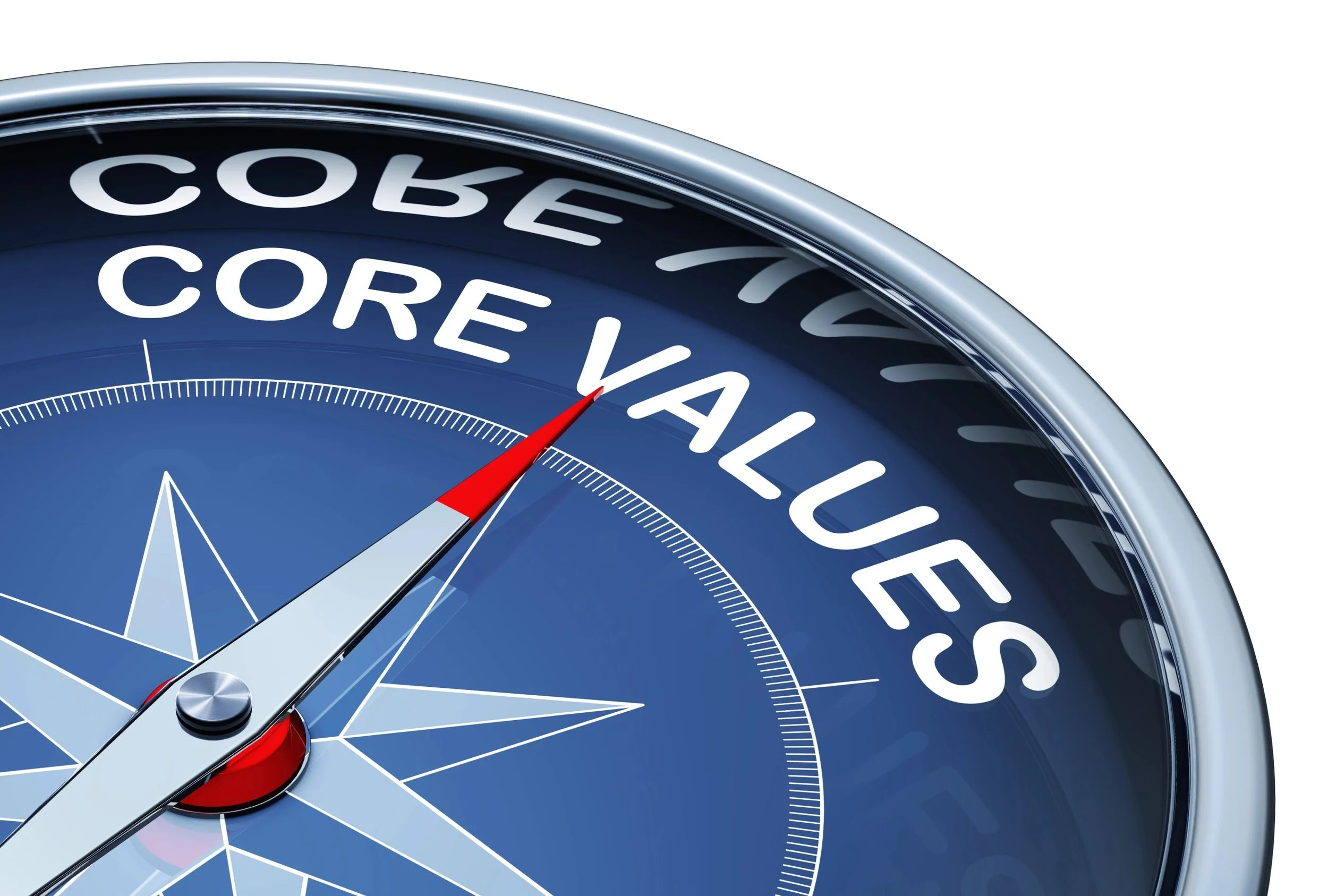
Life is full of choices. Some are monumental, with far-reaching consequences, while others are the small, everyday decisions we make almost on autopilot. But behind nearly all of them—big or small—lie our values. These internal compasses shape the kind of person we are or strive to become. They influence the people we choose to work with, the friendships we nurture, and the direction we take in life. Our values quietly declare what truly matters to us—and just as importantly, what doesn’t. When we drift from them or ignore them altogether, the effects are rarely loud at first, but they add up: stress, dissatisfaction, burnout, disconnection. The toll is not just mental and emotional—it’s deeply spiritual. Our work suffers. Our relationships weaken. And we lose our sense of purpose.
That’s why it’s critical to take the time to uncover and name our core values. Some stay constant throughout our lives, forming the foundation of who we are. Others shift as we grow, shaped by life experiences, challenges, and transformations. In moments when we feel lost, stuck, or unfulfilled, it’s worth asking: Am I living in alignment with what I say matters most?
If the answer is no, don’t rush to fix it. Be curious instead. Reconnect with your values. Let them be a lens, a filter, a map. Because when our actions reflect our values, we show up more fully—in our work, in our relationships, and in our lives. In the end, your values are not just abstract ideas. They are your north star. And if you don’t choose to follow them, something—or someone—else will choose for you.
Questions Leaders Ask
In this week's Conflict EQ Lens, we explore what happens when we begin to drift from our values, purpose, and sense of meaning. Here are answers to some of the most common questions leaders and professionals ask about staying anchored to what matters most.
Why do successful people sometimes feel lost or unfulfilled?
Success and fulfillment are not always the same thing. A person can achieve career goals, financial security, or professional recognition and still feel disconnected from their work or life. Often, this feeling emerges when daily actions no longer align with deeply held values or a sense of purpose. Feeling adrift is not necessarily a sign that something is wrong—it may be an invitation to reflect on what truly matters.
What are core values and why are they important?
Core values are the principles and beliefs that guide our decisions, behaviors, and relationships. They act as an internal compass, helping us determine what is most important and how we want to show up in the world. When our choices align with our values, we often experience greater clarity, fulfillment, and resilience. When we drift away from them, we may experience frustration, dissatisfaction, or a loss of direction.
How do I know if I am living out of alignment with my values?
Common signs include feeling disconnected from your work, lacking motivation, experiencing persistent frustration, or sensing that something important is missing despite external success. Misalignment often occurs gradually, making it difficult to notice at first. Taking time to reflect on what matters most and whether your actions support those priorities can help identify areas where adjustment may be needed.
Can values change over time?
Yes. While some values remain remarkably consistent throughout life, others evolve as we gain experience, face challenges, and enter new seasons of life. What mattered most at age twenty may not be what matters most at age fifty. Regular reflection helps ensure that your decisions and priorities continue to align with who you are becoming.
How can leaders make decisions that align with their values?
Values-based leadership begins with clarity. Leaders who understand their core values can use them as a filter when making decisions, setting priorities, and navigating difficult situations. When faced with competing demands, asking "Which option best reflects my values?" can provide direction and reduce uncertainty.
What is the connection between values and purpose?
Values define what matters most to us, while purpose reflects how we express those values in our lives and work. Purpose often grows from living in alignment with our values and contributing to something larger than ourselves. When values and purpose work together, they provide stability during times of uncertainty, change, and challenge.
What is Conflict EQ?
Conflict EQ is the ability to remain grounded, curious, and constructive when tension, disagreement, or difficult conversations arise. Strong Conflict EQ begins with self-awareness, including an understanding of the values that guide our behavior. When leaders are anchored in their values, they are better able to navigate conflict, pressure, and uncertainty without losing their footing.