
More Than I Imagined
by Trista Schoonmaker
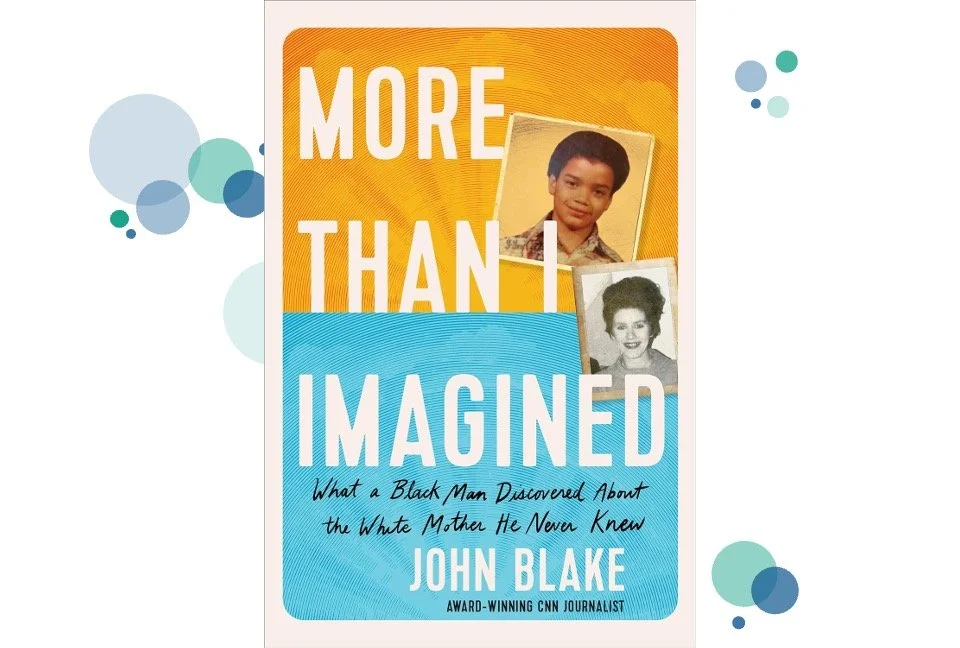
More Than I Imagined: What a Black Man Discovered About the White Mother He Never Knew
Book Author: John Blake
Why Does It Matter?
I’ve always loved memoirs for the way they invite us into someone else’s world—allowing us to see through their eyes and imagine their experiences. I recently read More Than I Imagined by CNN journalist John Blake, in which he tells the story of meeting his White relatives for the first time—family members who had rejected him because of his Black father and were absent throughout his childhood. It’s a compelling, deeply personal narrative filled with mystery, discovery, religious transformation, emotional growth, the pain of mental illness, and the complex racial dynamics of a mixed-race family.
I hesitated to write about it through a single lens, knowing that to do so might risk minimizing its many powerful themes. For example, Blake’s reflections on Michelle Adams’ concept of “radical integration” and its importance in sustaining our democracy—were particularly moving to me. But for this piece, I’m focusing on one thread that connects directly to our work in conflict resilience: the power of relationship in healing division.
It matters because, even in our most divided moments, connection is still possible when we are willing to open ourselves to another person’s truth.
My Key Insights
When we’re in conflict with someone—even when it’s just at the level of tension and awkwardness—most of us instinctively avoid being in relationship with them. We cling to our own story about who they are and why. We may not even recognize it as a “story,” imagining our own perceptions to be reality.
What Blake’s story illustrates so beautifully is both the hard work and the transformational value of building relationships with people we don’t understand. This doesn’t happen easily! It wasn’t as if he met his mother and extended family, and they all decided to become friends. It unfolded through years of deliberate effort: reaching out, retreating, asking questions, becoming more self-aware—small imperfect moments that eventually built something meaningful.
This is what is so easy to miss in conflict. We “don’t trust” the other, so we avoid them and interpret their actions through that lens, and the cycle reinforces our distrust.
But what if we could interrupt the cycle? What if we learned just one genuine thing about the other person? What if we gave them a chance to show up at their best, asking about their life, their joys, their perspective—allowing their telling of their story to replace the one we’ve imagined?
Blake quotes Paulo Coelho from the forward to The Alchemist: “Even if my neighbor doesn’t understand my religion or understand my politics, he can understand my story. If he can understand my story, then he’s never too far from me. It is always within my power to build a bridge.”
While this wasn’t the only theme in the book, it was one that resonated strongly with me—the slow, sometimes painful work of listening deeply enough to see each other more clearly.
How Can I Use This?
Ask yourself: “Who do I hold a strong negative opinion about—without ever really hearing their story?” Becoming aware of where we’ve filled in the blanks with assumptions is the first step to shifting perspective. Recognizing that our “story” about them might not match their lived experience opens the door to new possibilities in the relationship.
If someone comes to mind, start small. You don’t have to dive into the heart of the disagreement right away. Instead, look for natural moments to ask about experiences, values, or influences that might be shaping how they’re approaching this situation. Questions that connect their life experiences to the current disagreement can help you better understand what’s driving their perspective and why certain outcomes matter so much to them.
Potential Starter Questions:
It sounds like [X] is important to you. What about it resonates so strongly?
What experiences have shaped your perspectives on this topic?
Was there a turning point that shaped the way you saw this issue?
Have you experienced something like this before—either at work or outside it—that’s shaping how you’re seeing it now?
What personal values do you feel are most connected to your position on this?
Conflict EQ Q&A
In this week's Conflict EQ Lens, we explore lessons from the memoir More Than I Imagined by John Blake. The book examines identity, family, race, belonging, and reconciliation. One of its most powerful lessons is that relationships often begin to heal when people move beyond assumptions and become genuinely curious about each other's stories.
Why do people make assumptions about others during conflict?
When tension arises, people naturally try to make sense of what is happening. In the absence of complete information, they often fill in the gaps with assumptions about another person's motives, intentions, values, or character. Over time, these assumptions can harden into stories that shape how people interpret future interactions.
How do assumptions contribute to conflict?
Assumptions narrow perspective. Once people become convinced they understand someone else's intentions, they often stop asking questions and start looking for evidence that confirms their beliefs. This can create cycles of misunderstanding, distrust, and defensiveness that become difficult to interrupt.
Why are stories important in building understanding?
Stories provide context. They help explain how experiences, values, relationships, culture, identity, and life events shape a person's perspective. When people understand someone's story, they are often better able to understand behaviors, reactions, concerns, and beliefs that previously seemed confusing or frustrating.
Can understanding someone's story reduce conflict?
Understanding another person's story does not automatically eliminate disagreement, but it often increases empathy and reduces harmful assumptions. People can continue to disagree while gaining a deeper appreciation for why an issue matters to the other person.
What is the difference between understanding and agreeing?
Understanding means recognizing and appreciating another person's perspective, experiences, or reasoning. Agreement means sharing the same conclusion or position. Productive conflict often depends on understanding, even when agreement is not possible.
How can leaders become more curious during conflict?
Leaders can ask open-ended questions, listen carefully, suspend assumptions, and seek to understand the experiences influencing another person's perspective. Curiosity shifts conversations away from proving who is right and toward learning what may not yet be understood.
What questions help uncover someone's story?
Helpful questions include:
What experiences shaped your perspective on this?
What makes this issue important to you?
How did you arrive at this point of view?
What concerns are influencing your thinking?
What values feel most connected to your position?
Why is relationship-building important during disagreement?
Strong relationships create opportunities for trust, understanding, and dialogue. When people know each other beyond the conflict itself, they are often more willing to assume positive intent, engage constructively, and remain open to different perspectives.
What is Conflict EQ?
Conflict EQ is the ability to remain grounded, curious, and constructive when tension, disagreement, or difficult conversations arise. A key element of Conflict EQ is the willingness to move beyond assumptions and seek to understand the stories, experiences, and values shaping another person's perspective.