

What if Conflict isn’t the Problem?
We help leaders engage workplace conflict without losing connection.
✓ Disagreement without escalation
✓ Conversations that matter
✓ Composure under pressure

When tension rises, capacity matters.

Most organizations don’t fail because of conflict. They struggle because leaders’ capacity collapses under its weight.
When tension increases, even capable leaders slip into emotional autopilot.
They avoid conversations that matter.
Or they push too hard, too fast.
Issues go quiet—then resurface louder.
The cost isn’t just discomfort. It shows up as stalled decisions, strained relationships, and leadership fatigue, especially in moments that require clarity the most.
We don’t stop at resolving conflict.
We build leaders’ capacity to navigate it.
Conflict EQ focuses on the human capacity most leadership programs miss: how leaders show up when tension is high and the stakes are personal.
Our work strengthens a leader’s ability to stay steady under pressure, stay open when it would be easier to protect, and move forward without damaging trust.
This work grew out of real leadership moments—where good people cared deeply, but lacked the capacity to stay grounded when it mattered most.
Take our Impacts of Conflict Snapshot
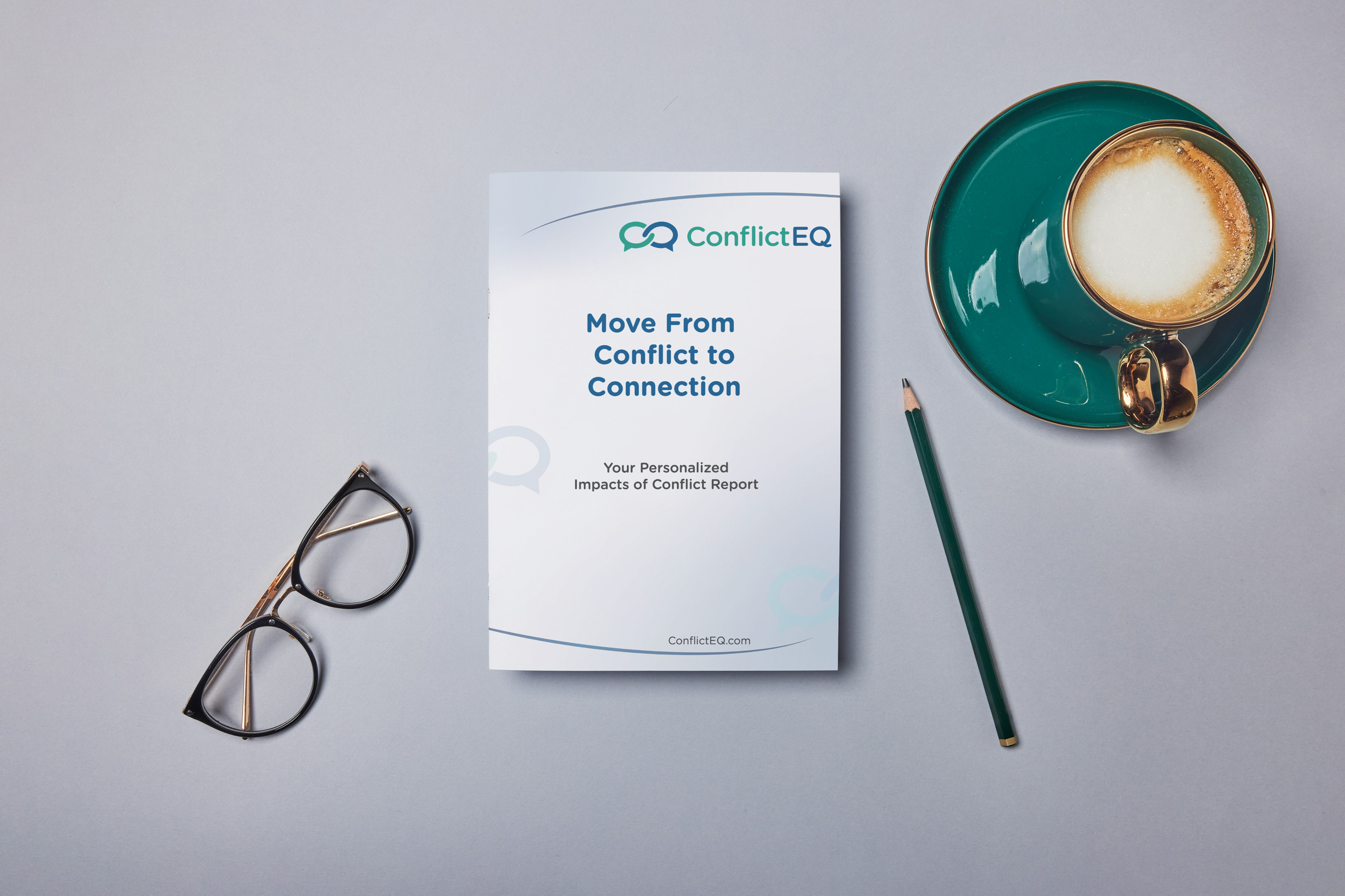
The Impacts of Conflict Snapshot is a short assessment that can help you understand how conflict is currently impacting your team.
12 easy questions
Completely free
Get your customized results instantly

Informed by respected frameworks.
Grounded in real leadership moments.
Conflict EQ draws from established, research-backed approaches to conflict, emotional intelligence, and team dynamics.
But we don’t treat frameworks as answers in themselves. We integrate what’s useful to build leaders’ capacity to stay grounded, curious, and clear when tension is present.
This work is designed for moments when emotions are real, stakes are personal, and leaders don’t have the luxury of perfect conditions. The goal isn’t to give leaders more tools—it’s to help them remain steady enough to use what they already know well.



Our clear path from conflict to connection
Conflict EQ gives leaders a practical way to move through tension—without scripts, avoidance, or damage.
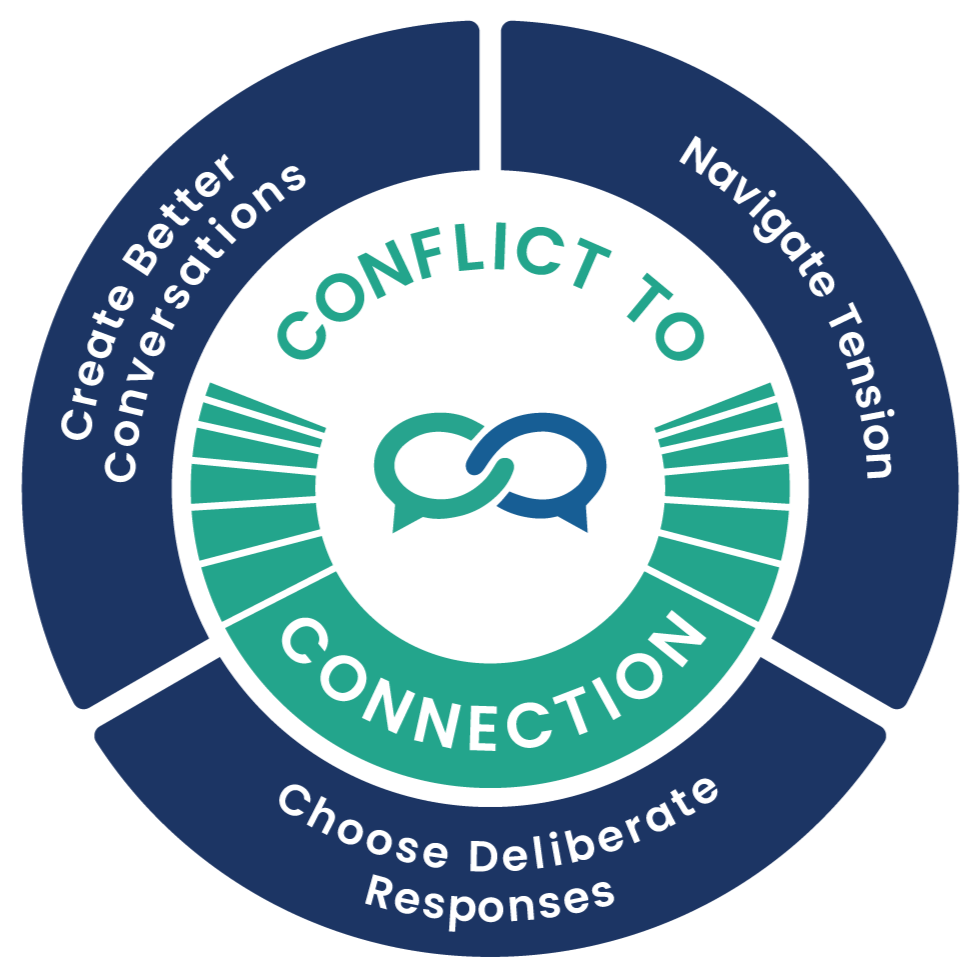
We focus on three capacities:
Choose Deliberate Responses
Staying regulated instead of reactive when pressure rises.Create Better Conversations
Increasing clarity and connection, especially when perspectives differ.Navigate Tension
Engaging disagreement without escalation or erosion of trust.
This is Conflict EQ™—the capacity to stay human under pressure.
. . .whether providing support where tension is already high, or working to build capacity before it escalates.
We meet conflict where it is. . .
When Conflict is Already Hot
We create enough stability to move forward without escalation or fallout.
Conflict Stabilization Coaching
Workplace Mediation
Team Conflict Reset
Before Conflict Becomes a Pattern
We build leaders who can hold tension without passing it on.
Conflict EQ Training
Targeted Coaching for key leaders
Team Building Workshops

Avoidance costs more than disagreement ever will.

When conflict goes unaddressed, the cost rarely shows up all at once.
Energy drains. Issues cycle back. Capable people quietly disengage—or leave.
Escalation damages trust, but silence does too.
Leaders don’t fail because they lack good intentions. They struggle because their capacity collapses under pressure—and they need more practice with how to hold it.
Conflict EQ changes that.

What changes as leaders strengthen their Conflict EQ?
Conflict EQ is a leadership capacity that helps individuals and teams engage disagreement without avoidance, escalation, or damage to trust.
Leaders don’t describe our work as “fixing conflict.” Rather, they point to greater confidence, clearer conversations, and a renewed willingness to engage across differences.
“Conflict EQ’s engaging approach and real-world strategies helped us understand how to navigate difficult conversations with confidence and empathy.”
—Deb C, HR Business Partner
“With Conflict EQ’s guidance, our team underwent a 180-degree turn-around in our ability and willingness to communicate and work together toward common goals.”
—Michael M, Branch Chief