
How Does Conflict Affect Workplace Culture?
Conflict affects workplace culture through the patterns people learn about what can be said, what gets avoided, how disagreement is handled, and whether trust can survive tension. Learn how leaders can shape those patterns more constructively.
Why Do People Avoid Conflict
People avoid conflict for many reasons, including fear of escalation, concern about relationships, uncertainty, power differences, and the short-term relief avoidance provides. Learn what research reveals about conflict avoidance and how to respond more deliberately.
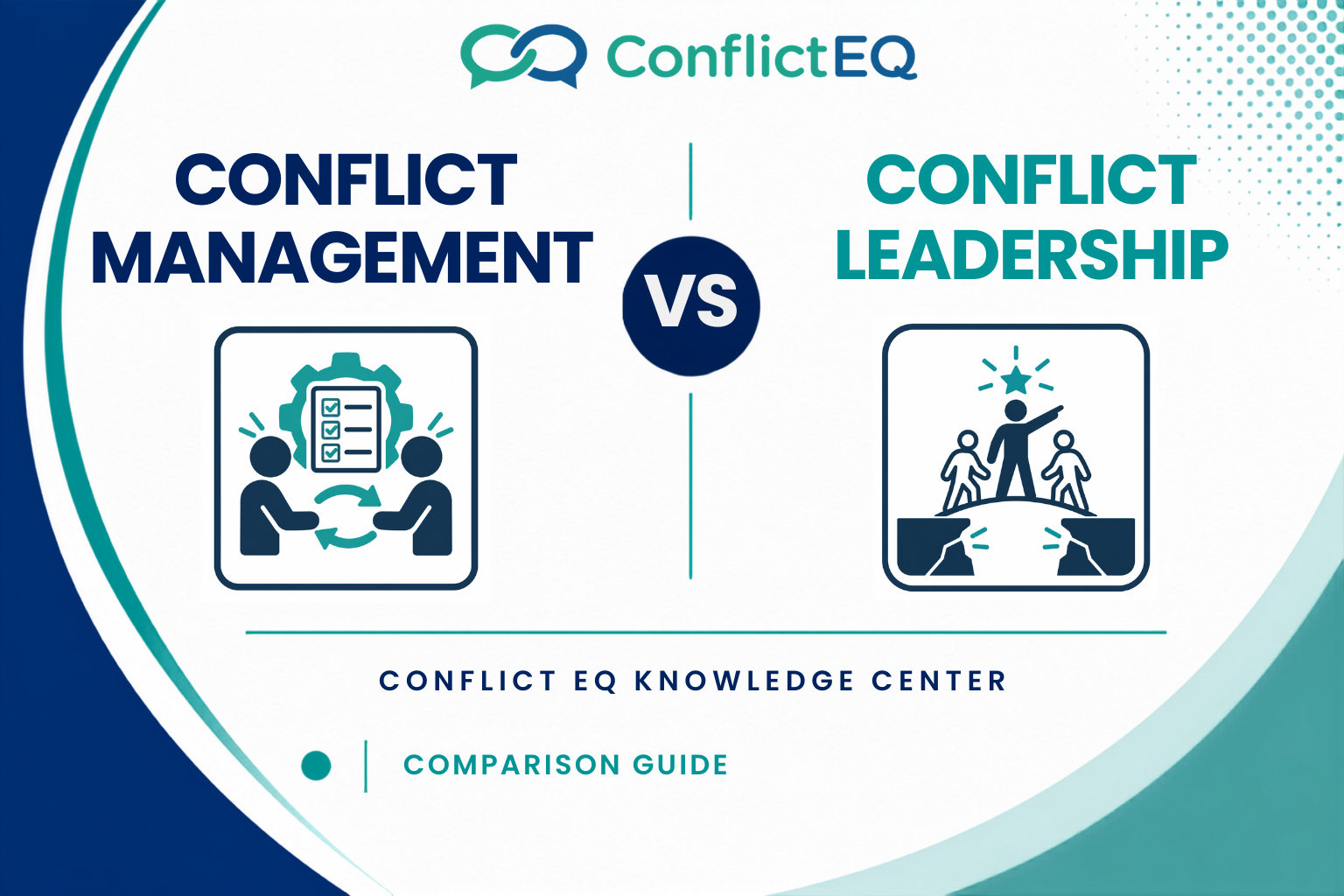
Conflict Management vs Conflict Leadership
Conflict management focuses on handling conflict effectively. Conflict leadership asks a broader question: how leaders shape the conditions, responses, and systems around conflict. Learn where the two approaches overlap—and where they differ.
How Is Conflict Coaching Different From Mediation?
Conflict coaching and mediation both help people navigate workplace conflict, but they work in different ways. Learn when individual coaching, joint mediation, or a combination of both may be the better fit.
What Is Fight?
The fight response is not limited to anger or aggression. In workplace conflict, it can appear as arguing harder, interrupting, controlling, defending, or pushing for immediate resolution. Learn what drives it and how Conflict EQ helps people respond more deliberately.

What Is Psychological Safety?
Psychological safety is the belief that people can speak up, ask questions, admit mistakes, and raise concerns without excessive interpersonal risk. Learn why it matters for conflict, trust, learning, and team performance.

What Happens in the Brain During Conflict?
Conflict can change how we pay attention, interpret information, regulate emotion, and make decisions. This research explainer examines what happens in the brain during conflict—and what leaders can do with that understanding.
How Do I Stay Calm During a Difficult Conversation?
Staying calm during a difficult conversation does not mean eliminating emotion. Learn how to notice rising pressure, restore enough capacity to respond deliberately, and stay constructive when a conversation becomes difficult.
How Should Leaders Address Team Conflict?
Team conflict rarely improves simply because a leader tells people to work it out. Learn how leaders can understand what is driving the conflict, intervene at the right level, and help teams move toward greater clarity, accountability, and connection.
Why Do Smart Leaders Become Reactive?
Why do capable, intelligent leaders sometimes become defensive, controlling, avoidant, or reactive during conflict? Explore how pressure changes access and why Conflict Capacity matters.
How Does Unresolved Conflict Affect Organizations?
Unresolved workplace conflict rarely stays between the people involved. Learn how it can spread through trust, communication, teams, leadership attention, engagement, and organizational performance—and what leaders can do about it.
Is Conflict Always Bad?
Conflict is not inherently good or bad. Explore what research reveals about when conflict becomes constructive or destructive and why the capacity to navigate it matters.
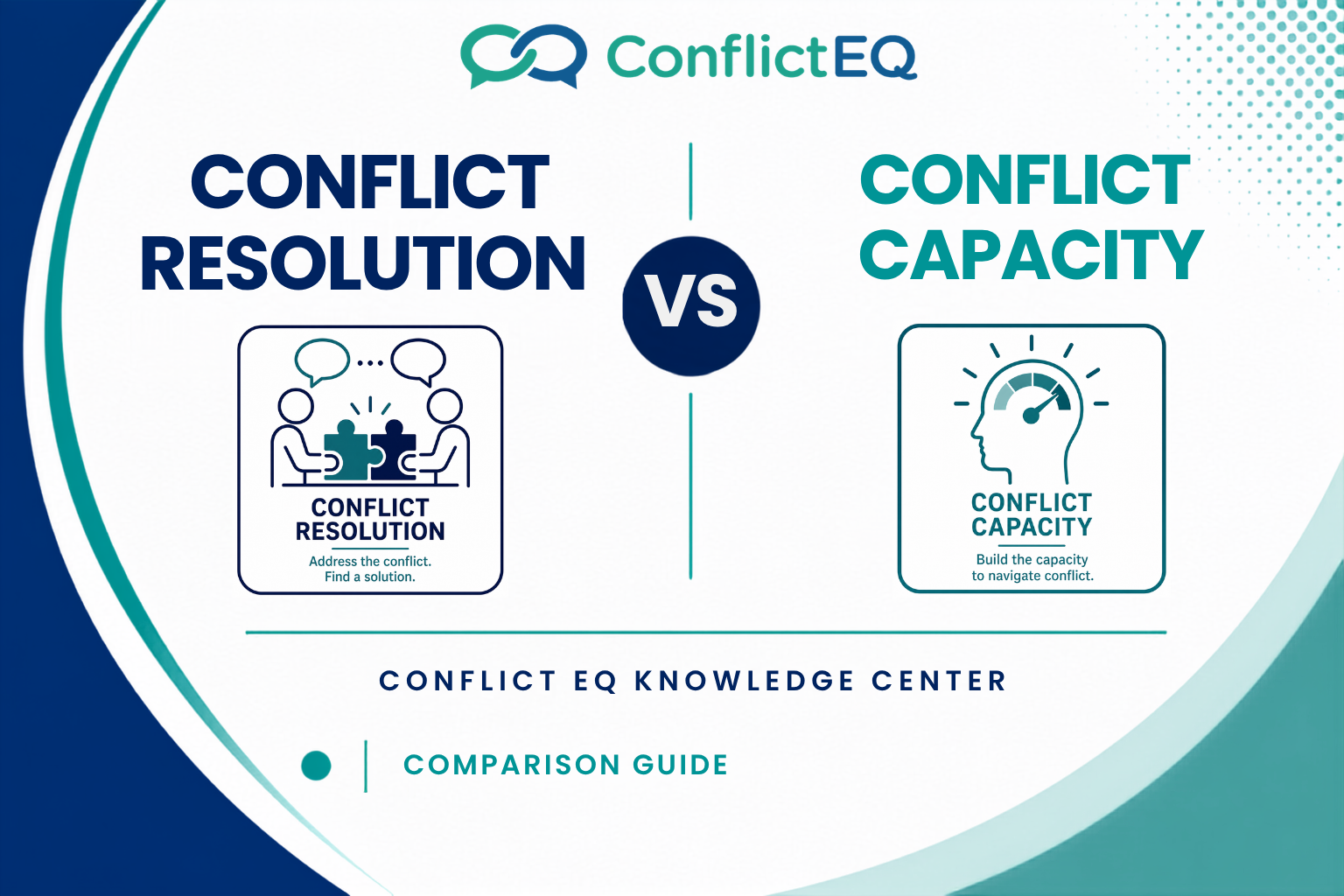
Conflict Resolution vs Conflict Capacity
Conflict resolution explains ways to address conflict. Conflict Capacity examines whether people can remain constructive enough to use those approaches when pressure rises. Explore the difference and why leaders need both.
What Is Workplace Mediation?
Learn what workplace mediation is, how a neutral mediator helps people navigate workplace conflict, when mediation is appropriate, and what makes the Conflict EQ® approach different.
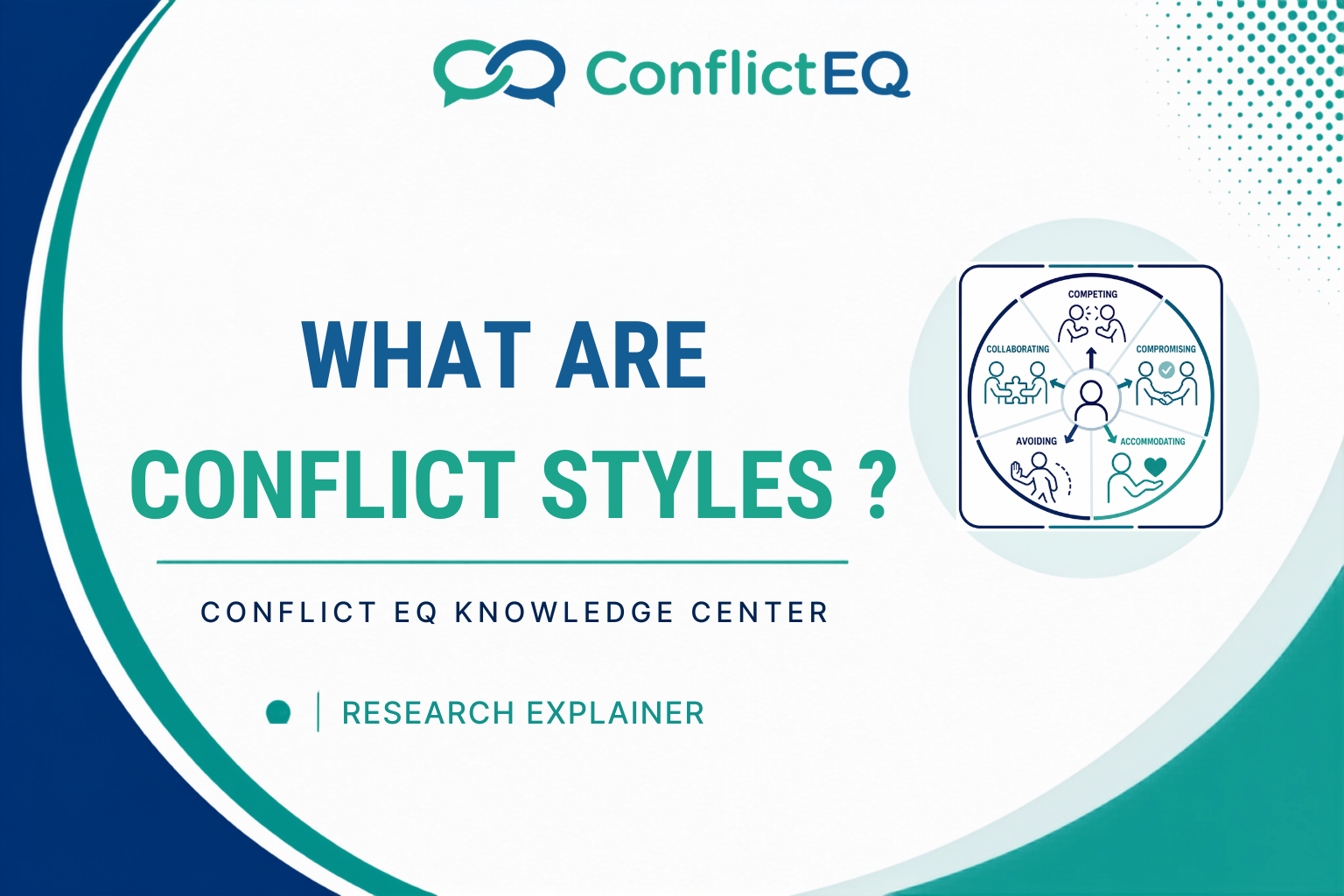
What Are Conflict Styles?
Explore the five common conflict styles—competing, collaborating, compromising, avoiding, and accommodating—and learn why effective conflict requires flexibility rather than one ideal style.
How Does Conflict Impact Trust?
Learn how conflict can weaken or strengthen workplace trust and practical ways leaders and teams can recognize trust damage, repair relationships, and rebuild confidence.

Why Do Emotions Take Over During Conflict?
Explore why do emotions take over during conflict, the factors that drive this pattern, and what research and Conflict EQ® suggest about responding more constructively.
How Do I Prepare for a Difficult Conversation?
Learn how to prepare for a difficult conversation with practical steps for clarifying the issue, examining assumptions, managing triggers, and entering the conversation with greater intention.

What Happens When Leaders Avoid Conflict?
Explore what happens when leaders avoid necessary conflict and how unresolved issues can affect trust, accountability, communication, relationships, and team performance.
How Do Leaders Stay Grounded Under Pressure?
Explore how leaders stay grounded when conflict and pressure rise, and how Conflict EQ® helps leaders maintain greater access to curiosity, perspective, and deliberate responses.