

How Do Hybrid Teams Experience Conflict Differently?
Hybrid work does not necessarily create more conflict, but it changes the conditions in which conflict develops. Differences in communication, visibility, access to context, proximity, and informal interaction can make misunderstandings easier to create and harder to repair.

What Is Unhealthy Conflict?
Unhealthy conflict develops when disagreement begins to damage communication, relationships, decision-making, or the ability to work together. The issue is not simply that conflict feels uncomfortable, but that the way it is unfolding is becoming destructive.
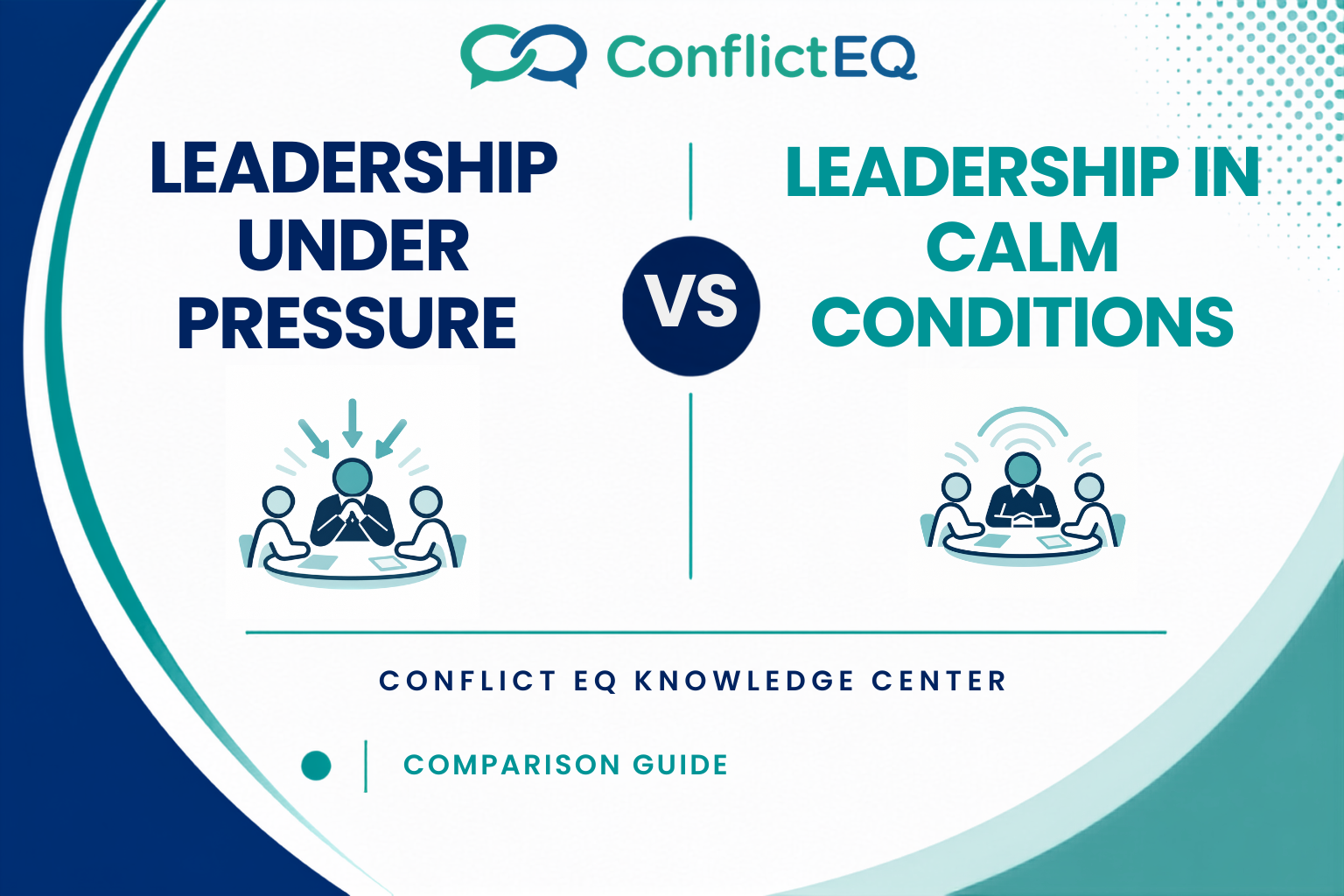
Leadership Under Pressure vs. Leadership in Calm Conditions
Leadership under pressure relies on many of the same capabilities used in calm conditions, but greater emotional, cognitive, and relational load can change how readily leaders access those capabilities. Understanding the difference helps leaders prepare for difficult decisions, conversations, and relationships.

How Do You Repair a Working Relationship?
Accountability and blame both involve questions of responsibility, but they serve different purposes. Accountability establishes what happened, who is responsible, what needs to change, and how commitments will be honored. Blame focuses more narrowly on fault and culpability. Understanding the distinction helps leaders address mistakes and misconduct without sacrificing fairness, learning, or trust.

What Is Fawn?
Fawn describes a pattern of appeasing or over-accommodating others when conflict feels threatening. It may reduce immediate tension while leaving personal needs, boundaries, and important workplace concerns unaddressed.

How Do Teams Address Ongoing Tension?
Ongoing team tension rarely disappears simply because people remain professional. Addressing it requires understanding the patterns beneath repeated friction, creating opportunities for honest dialogue, clarifying expectations, and following through on meaningful changes.

Emotional Intelligence Be Learned?
Emotional intelligence is not simply a fixed trait. Research suggests that emotional and interpersonal capabilities can be developed, although what changes, how much it changes, and how well learning transfers into real behavior depend on the person, method, context, and practice.

How Do I Give Difficult Feedback?
Difficult feedback is most useful when it is specific, grounded in observable behavior, clear about impact and expectations, and delivered in a way that allows the other person to understand and respond.

Why Is Conflict a Leadership Responsibility?
Conflict is a leadership responsibility because leaders shape the conditions in which people disagree, the behavior that is tolerated, and whether problems are addressed early or allowed to become entrenched.
What Is Reflective Thinking?
Reflective thinking is the deliberate process of examining what happened, how you interpreted it, how you responded, and what you might do differently next time. In conflict, reflection helps turn experience into learning instead of repetition.

How Does Conflict Affect Retention?
Workplace conflict can affect retention when persistent tension, damaged relationships, unfairness, or unresolved problems make staying feel less workable than leaving. The relationship is important, but conflict is one of many factors that shape turnover decisions.
What Is Healthy Conflict?
Healthy conflict is disagreement handled in ways that keep attention on the issue, allow different perspectives to surface, and preserve enough trust and respect for people to work constructively together.
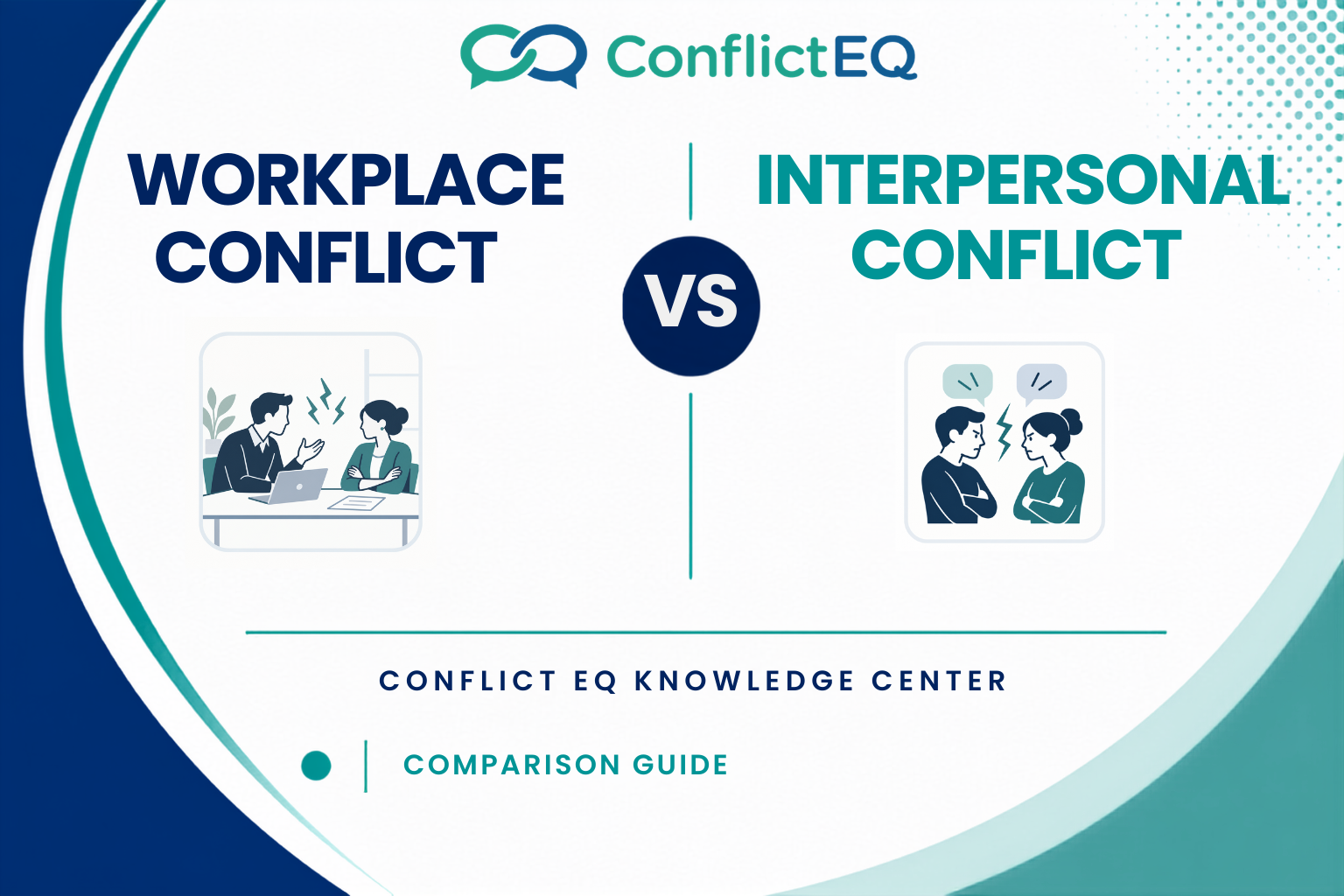
Workplace Conflict vs Interpersonal Conflict
Workplace conflict and interpersonal conflict overlap, but they are not the same. Workplace conflict may arise from roles, resources, decisions, goals, systems, or relationships; interpersonal conflict specifically centers on tension between people.
What Is Paired Conflict Coaching?
Paired conflict coaching helps two people strengthen how they understand, communicate, and respond to conflict while working on a real relationship or recurring pattern of tension.

What Is Freeze?
The freeze response can make it difficult to think, speak, decide, or act when conflict feels threatening. Learn how it can appear at work and what can help restore enough capacity for constructive action.

How Do Teams Rebuild Trust After Conflict?
Teams rebuild trust after conflict by acknowledging what happened, addressing the impact, clarifying what needs to change, and creating enough consistent evidence over time for people to rely on one another again

What Is Emotional Intelligence?
Emotional intelligence involves abilities related to recognizing, understanding, using, and managing emotion. These abilities can strengthen communication and judgment, but conflict adds pressure that can make them harder to access when they are needed most.

How Do I Address Problematic Behavior at Work?
Address problematic behavior by naming what you observed, explaining its impact, and clarifying what needs to change without attacking the person.

What Is Conflict-Competent Leadership?
Conflict-competent leadership is the ability to recognize conflict, understand what is driving it, and respond in ways that keep disagreement workable rather than allowing avoidance, reactivity, or escalation to take over.

How Do I Shift My Response During Conflict?
Shift Response is the second point of the Conflict EQ Compass. It helps restore enough capacity to interrupt an automatic reaction and respond with greater intention.