

What Is Freeze?
The freeze response can make it difficult to think, speak, decide, or act when conflict feels threatening. Learn how it can appear at work and what can help restore enough capacity for constructive action.

How Do Teams Rebuild Trust After Conflict?
Teams rebuild trust after conflict by acknowledging what happened, addressing the impact, clarifying what needs to change, and creating enough consistent evidence over time for people to rely on one another again
What Is Emotional Intelligence?
Emotional intelligence involves abilities related to recognizing, understanding, using, and managing emotion. These abilities can strengthen communication and judgment, but conflict adds pressure that can make them harder to access when they are needed most.
How Do I Address Problematic Behavior at Work?
Address problematic behavior by naming what you observed, explaining its impact, and clarifying what needs to change without attacking the person.
What Is Conflict-Competent Leadership?
Conflict-competent leadership is the ability to recognize conflict, understand what is driving it, and respond in ways that keep disagreement workable rather than allowing avoidance, reactivity, or escalation to take over.

How Do I Shift My Response During Conflict?
Shift Response is the second point of the Conflict EQ Compass. It helps restore enough capacity to interrupt an automatic reaction and respond with greater intention.

How Does Conflict Affect Employee Engagement?
Workplace conflict can consume attention, weaken trust, and make employees less willing to invest themselves in their work. But not every disagreement has the same effect. Learn how conflict influences engagement and what leaders can do about it.

Why Does Conflict Escalate?
Conflict escalates when pressure rises and each person's response creates additional pressure for the other. Learn why disagreements intensify, what keeps escalation going, and how people can interrupt the cycle before it becomes destructive.
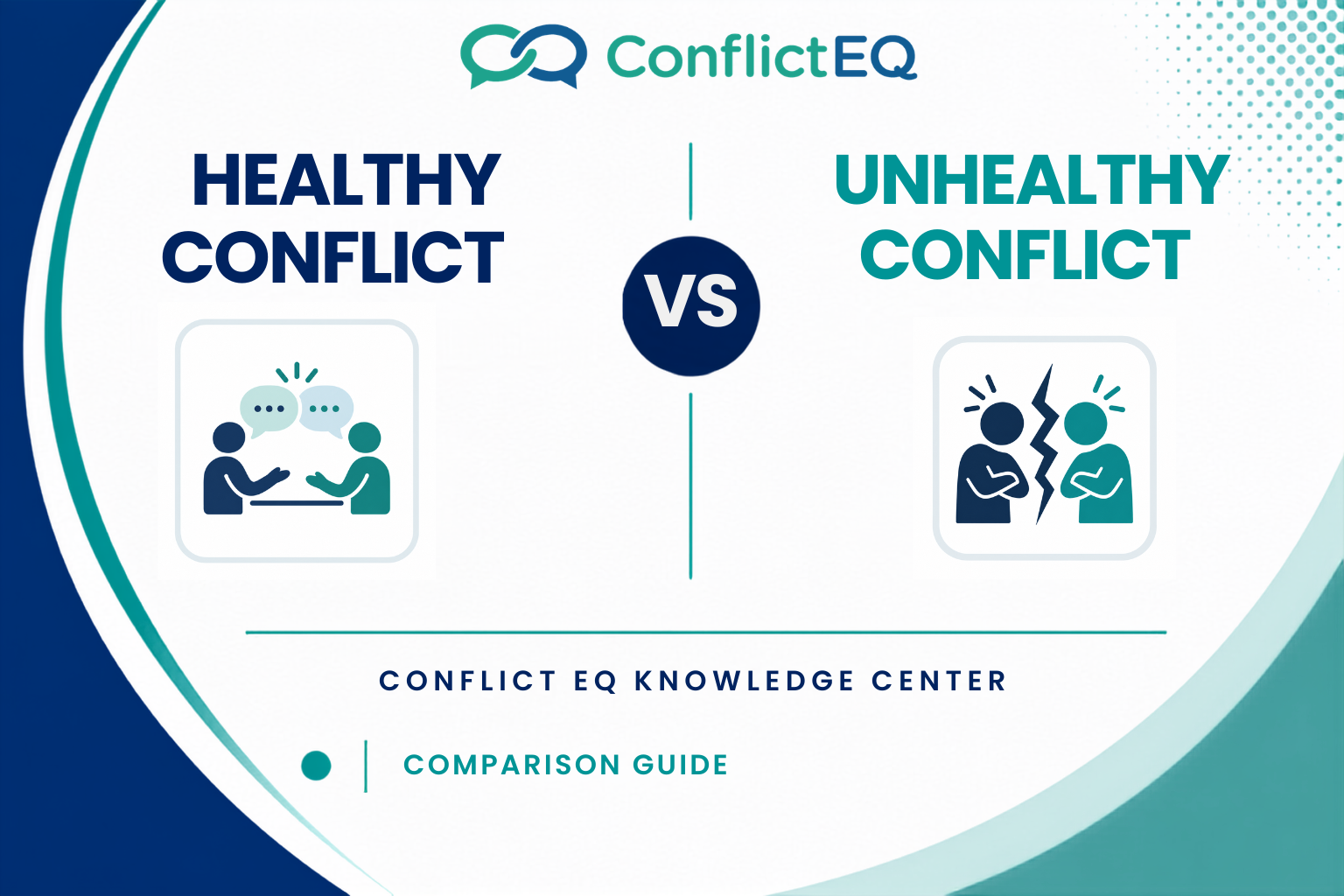
Healthy Conflict vs Unhealthy Conflict
Healthy conflict can surface useful differences, improve decisions, and clarify expectations. Unhealthy conflict narrows communication, damages trust, and makes collaboration harder. Learn how to recognize the difference and what leaders can do when conflict begins to shift.

When Should Leaders Consider Mediation?
Workplace mediation can be valuable when conflict has become difficult for people to address on their own, but not every conflict belongs in mediation. Learn the signs that mediation may help—and when leaders should consider coaching, management action, investigation, or another response instead.

What Is Flight?
The flight response is a protective pattern that moves away from perceived threat. In workplace conflict, it can appear as avoidance, withdrawal, delay, distraction, or leaving difficult issues unaddressed. Learn what drives it and how Conflict EQ helps people respond more deliberately.

Why Do Teams Avoid Difficult Conversations?
Teams often avoid difficult conversations not because people do not see the problem, but because speaking up feels risky, uncomfortable, or unlikely to help. Learn what drives collective avoidance and how leaders can help teams address tension earlier and more constructively.
What Is Emotional Regulation?
Emotional regulation is the ability to work with emotional responses without allowing them to automatically determine behavior. Learn why it matters in conflict, leadership, and difficult conversations.

What Should I Do When Emotions Rise?
When emotions rise during conflict, the goal is not to suppress them or force yourself to calm down. Learn how to notice the shift, restore enough capacity to respond deliberately, and keep the conversation constructive.

What Is Capacity Under Pressure?
Capacity Under Pressure explains how emotional, cognitive, and identity load can make it harder to think clearly, stay present, and respond constructively.

How Much Conflict Is Healthy on a Team?
Healthy teams are not conflict-free, but more conflict is not necessarily better. Learn how leaders can recognize the difference between constructive disagreement and conflict that is beginning to damage trust, communication, and performance.

Can Emotional Intelligence Fail Under Pressure?
Emotional intelligence does not disappear under pressure, but conflict can create enough load to make emotionally intelligent behavior harder to sustain. Learn how Conflict EQ connects emotional intelligence with Conflict Capacity under tension.
How Does Conflict Affect Workplace Culture?
Conflict affects workplace culture through the patterns people learn about what can be said, what gets avoided, how disagreement is handled, and whether trust can survive tension. Learn how leaders can shape those patterns more constructively.
Why Do People Avoid Conflict
People avoid conflict for many reasons, including fear of escalation, concern about relationships, uncertainty, power differences, and the short-term relief avoidance provides. Learn what research reveals about conflict avoidance and how to respond more deliberately.
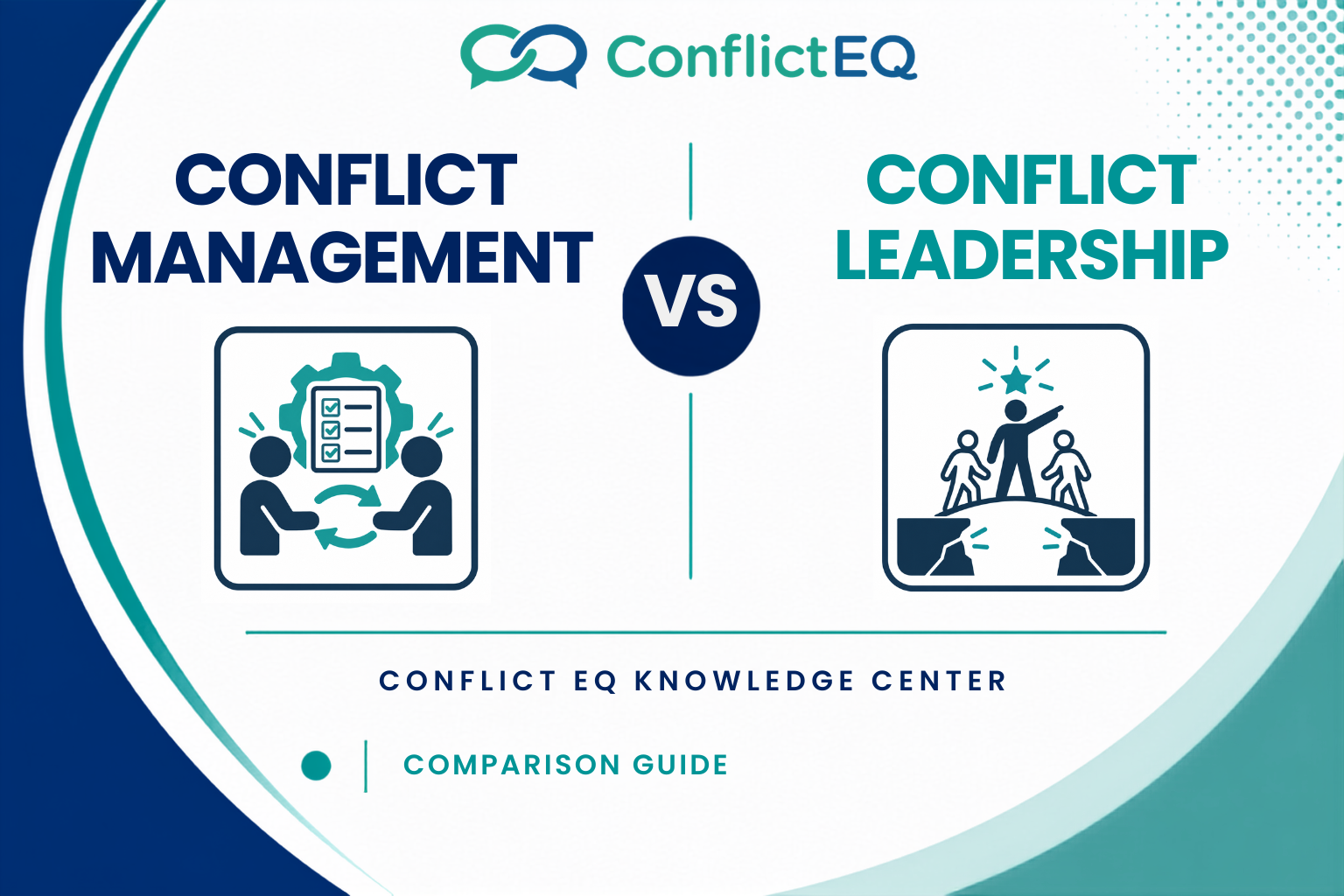
Conflict Management vs Conflict Leadership
Conflict management focuses on handling conflict effectively. Conflict leadership asks a broader question: how leaders shape the conditions, responses, and systems around conflict. Learn where the two approaches overlap—and where they differ.