
What Causes Workplace Conflict?
Explore what causes workplace conflict and how expectations, roles, resources, relationships, leadership, and organizational systems can create workplace tension.
Why Does Conflict Happen?
Explore why conflict happens, the factors that create tension between people, and what research and Conflict EQ® suggest about navigating conflict more constructively.
Conflict vs Disagreement: What's the Difference?
Understand the difference between Conflict and Disagreement, where each is useful, and what the distinction means for navigating workplace conflict more effectively.
What Is Conflict Coaching?
Learn what conflict coaching means, why it matters in workplace conflict, and how it influences leaders, teams, relationships, and constructive communication.
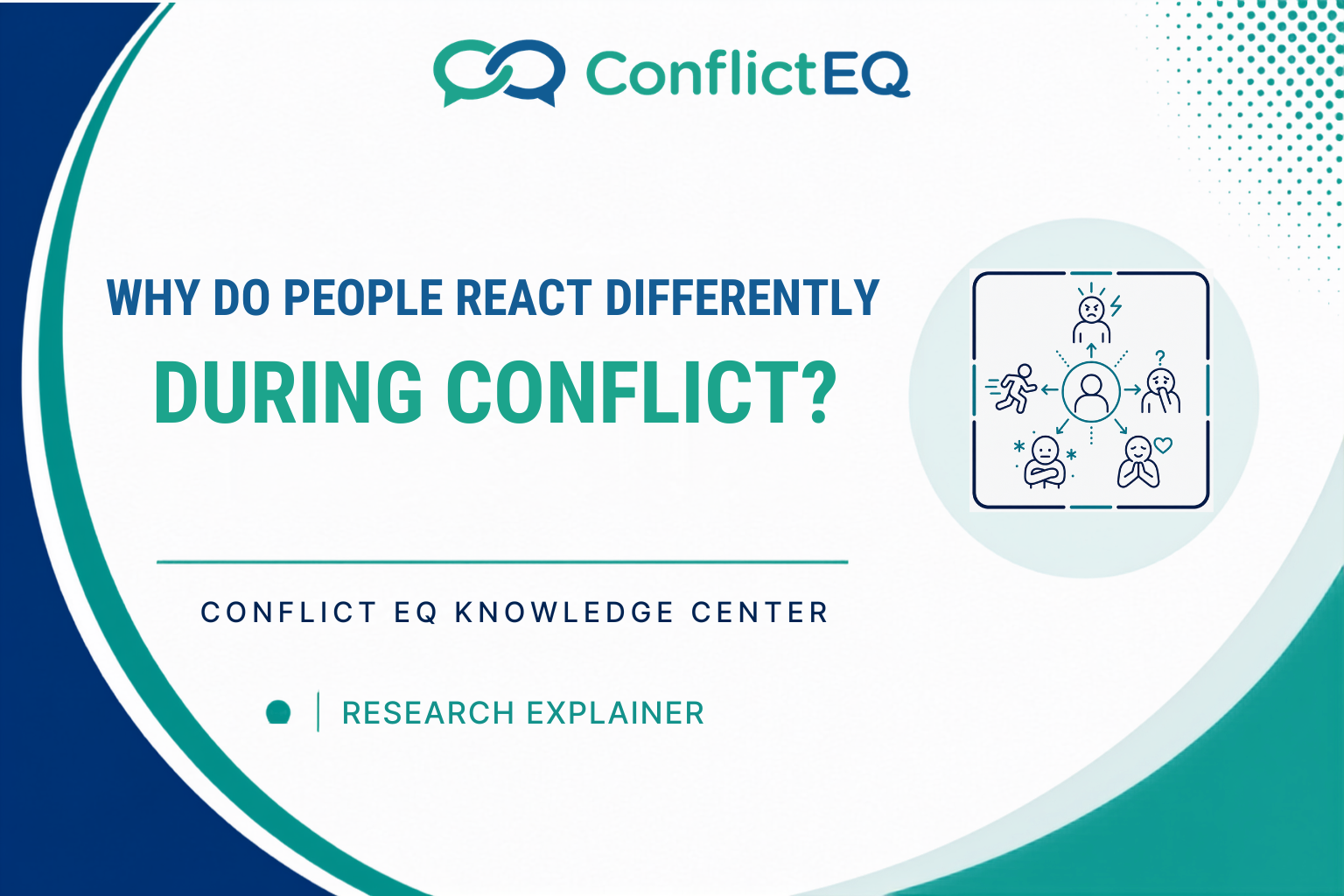
Why Do People React Differently During Conflict?
Explore why do people react differently during conflict, the factors that drive this pattern, and what research and Conflict EQ® suggest about responding more constructively.
How Does Conflict Affect Team Performance?
Learn how does conflict affect team performance with practical, research-informed guidance for navigating workplace conflict, difficult conversations, and leadership pressure more constructively.
What Role Do Emotions Play in Conflict?
Explore what role do emotions play in conflict through research on conflict, leadership, and human behavior, with practical implications for more constructive workplace conversations.
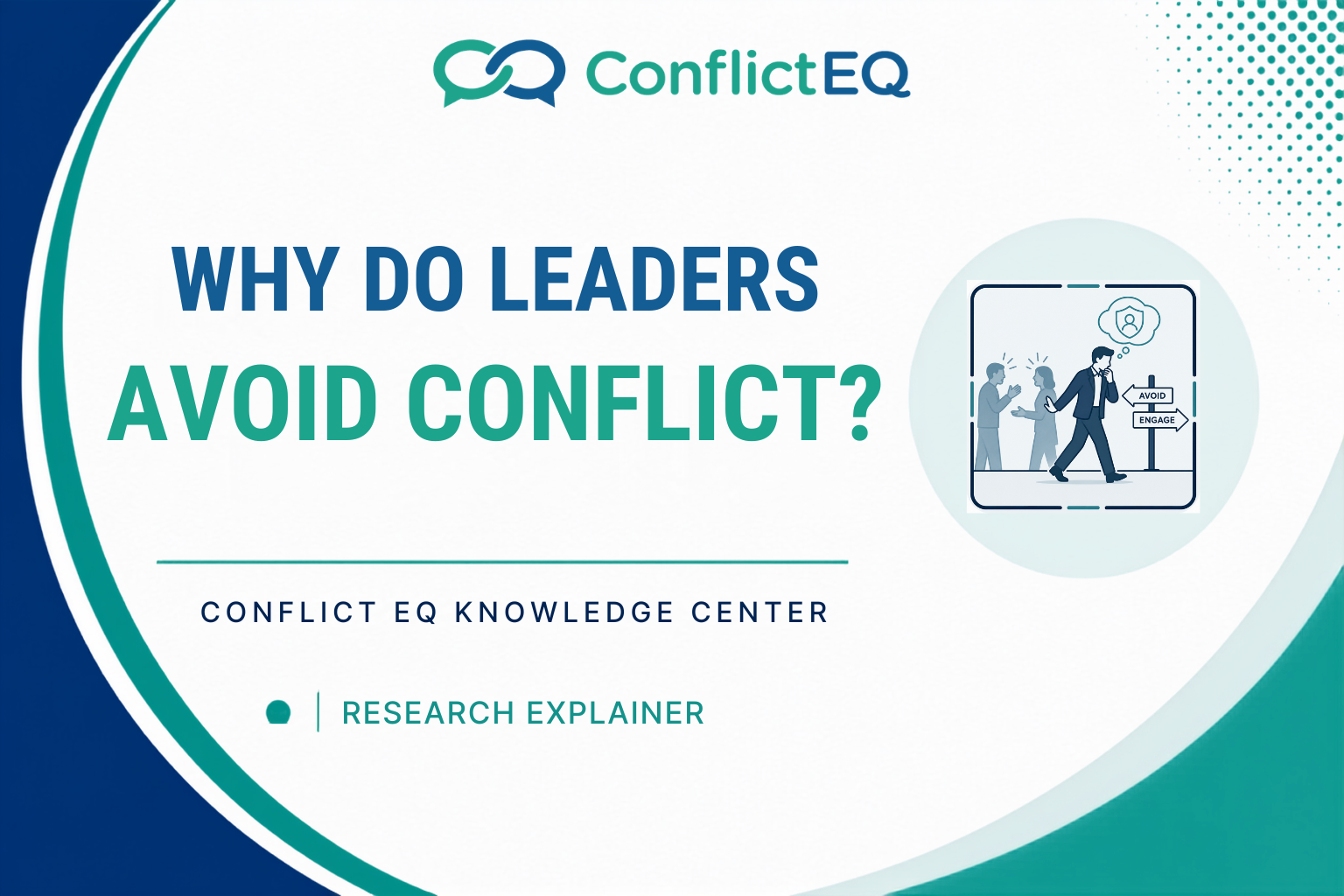
Why Do Leaders Avoid Conflict?
A conversation becomes difficult when emotional, relational, or practical stakes increase. Learn the seven factors that make conversations harder and how Conflict Capacity helps people stay constructive under pressure.
What Makes a Conversation Difficult?
Leaders often avoid conflict not because they lack courage, but because conflict creates emotional, relational, and organizational risk. Learn why avoidance feels attractive, what it costs teams, and how greater Conflict Capacity can help leaders engage difficult issues earlier.
How Does Load Affect Conflict Capacity?
Learn how emotional, cognitive, and relational load can affect Conflict Capacity, narrow behavioral range, and make constructive responses harder to access when tension rises.
What Is Conflict Capacity?
Conflict Capacity™ is the ability to remain emotionally regulated, cognitively flexible, relationally present, and behaviorally intentional while navigating conflict under pressure. Discover why it is the central capability within the Conflict EQ® framework and how it helps leaders, teams, and organizations remain constructive when conversations become difficult.
What Is Conflict EQ?
Conflict EQ is a research-informed leadership framework co-developed by Dr. Irvine Nugent and Trista Schoonmaker that helps leaders build Conflict Capacity—the ability to remain constructive under pressure. Learn how the framework, the Conflict to Connection™ Competency Model, and fifteen core competencies help leaders, teams, and organizations navigate conflict more effectively.
What Is Workplace Conflict?
Workplace conflict is inevitable—but it doesn't have to become destructive. Learn what workplace conflict is, why it happens, the different types of conflict organizations experience, and how the Conflict EQ framework helps leaders build the capacity to navigate conflict more effectively.
What Is Conflict?
Conflict is more than disagreement. It develops when meaningful differences between people begin to influence their thoughts, emotions, behaviors, or relationships. This article explains what conflict is, why it happens, how it can be both constructive and destructive, and why Conflict Capacity is essential for navigating it effectively.