
When Understanding Feels Like Taking Sides
by Dr. Irvine Nugent, CSP, PCC
I am a child of the Troubles.
Growing up in Northern Ireland, I grew up with a narrative about who was right and who was wrong. When you are immersed in a story like that, it becomes difficult to imagine how anyone could see things differently. Your own account feels so obvious.
And yet my father had many Protestant friends.
In a divided society, those friendships gave me a model for reaching across the divide. Looking back, I can appreciate what he gave me: an example of how relationships could extend beyond the boundaries of the story I had inherited.
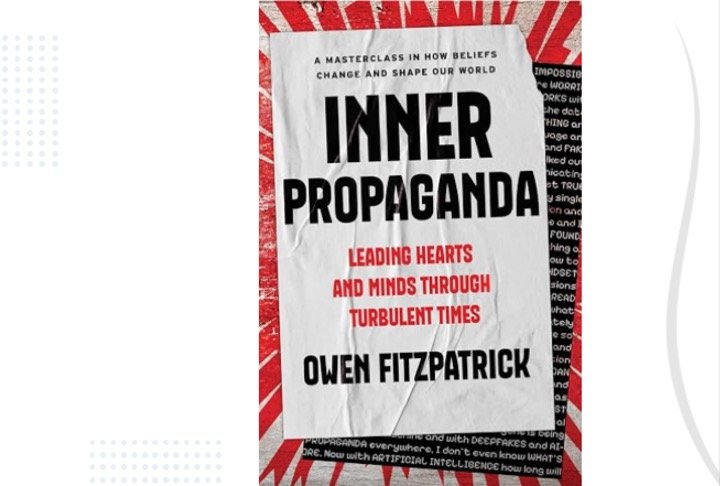
That part of my childhood came back to me while reading my friend Owen Fitzpatrick’s Inner Propaganda: Leading Hearts and Minds Through Turbulent Times.
I loved this book. I loved the stories, the accessibility of the writing, and the opportunity to spend time exploring what makes us tick. It takes on questions about belief, identity, and the workings of our minds without making them feel out of reach.
Reading it through the lens of my work in conflict, three themes stood out: how we become certain of our story, why questioning it can threaten our sense of belonging, and why trying harder to persuade someone can make them dig in.
1. We can mistake certainty for truth.
Owen explores how our minds reinforce familiar narratives and keep us attached to what we already believe. An explanation can feel convincing because it fits the story we know. That feeling deserves examination.
It brought me back to the stories I grew up with. From inside them, another perspective could seem almost impossible to understand.
There is a version of this in workplace conflict, too. We decide someone is difficult, and before long that description follows them into every interaction. They ask a question, and we hear criticism. They raise a concern, and we see another attempt to obstruct progress.
Eventually, we may stop being curious about what they are doing because we believe we already know why they are doing it.
Sometimes there is a real pattern of difficult behavior that needs attention. Even then, it helps to examine what we are adding to the picture.
The question I would carry into a conflict is: What do I know, and what am I assuming?
2. Questioning a belief can feel like betraying our own people.
One of the book’s central frameworks is “Feels Right, Fits In, Makes Sense.” Owen explores the roles of emotion, identity, and logic in the beliefs we accept and defend.
The “Fits In” element is especially relevant to conflict. A belief may connect us to our family, our community, or the people whose respect matters to us. Questioning it can carry a personal cost.
That is where understanding can begin to feel like taking sides.
In his discussion of polarization, Owen recalls Ian Paisley and Martin McGuinness. After decades as bitter opponents, they went on to share power and develop a friendship. Their laughter together earned them the nickname the “Chuckle Brothers.”
Set against the divisions I grew up with, that image is remarkable. Their history did not disappear. Yet their relationship became something their earlier hostility would scarcely have allowed anyone to imagine.
On a much smaller scale, consider a manager who has spent months agreeing with their team that another department is unreasonable. Then the manager hears a concern from that department that makes sense.
Acknowledging it back with their own team may feel surprisingly difficult. Will they feel unsupported? Will they think the manager has changed sides?
My father’s friendships gave me an early example of reaching beyond a divide. They leave me with a question that still matters: Can I take someone else’s perspective seriously without treating that as a betrayal of my own?
3. Pushing harder can make people defend harder.
Owen also examines why people can become more entrenched as we try harder to persuade them. His attention to emotion and identity helps explain why a carefully reasoned argument may fail to reach someone.
This has a practical application for anyone preparing for a difficult conversation. We can spend a great deal of time assembling our case: the examples, the evidence, the wording that will finally make the other person understand.
There is value in being prepared. But have we prepared to listen? Have we considered what the situation means to them, or what they might feel is at stake?
If someone hears our feedback as a judgment of their competence or character, another example of what they did wrong may increase their defensiveness.
A question such as “What concerns you most about this?” can reveal something our carefully constructed argument has never touched. We still need to address the issue. Understanding their concern gives us a better starting point.
The question here is: What matters to this person that my argument hasn’t addressed?
For me, Inner Propaganda is a must-read. If you lead people, work with conflict, or simply want to understand yourself a little better, there is much here to sit with—and to use in your next difficult conversation.
It also brought back the image of my father maintaining friendships across a divided society.
I grew up with a story about who was right and who was wrong. I was fortunate to have a father whose friendships gave me a way to see beyond it.
Whose perspective have you stopped trying to understand because you already know which side they are on?
When Understanding Feels Like Taking Sides: Q&A
What is the central idea of this article?
Understanding another person’s perspective can feel like taking their side, particularly when our beliefs are connected to identity, loyalty, or belonging. However, taking a perspective seriously does not require us to agree with it or abandon our own.
Why can understanding someone else feel like taking sides?
Beliefs often connect us to families, teams, communities, and other groups that matter to us. When we acknowledge that someone outside our group has a valid concern, we may worry that our own people will see us as disloyal or unsupportive.
Is understanding another perspective the same as agreeing with it?
No. Understanding means becoming more curious about how another person sees the situation and what matters to them. You can understand their perspective while continuing to disagree, maintain a boundary, or address problematic behavior.
How does identity influence conflict?
Conflict becomes more difficult when an issue feels connected to competence, character, belonging, values, or group identity. When something important to our sense of self feels threatened, we are more likely to become defensive and hold tightly to our existing position.
Why can we mistake certainty for truth?
An explanation can feel true because it fits the story we already believe. Once we become certain about another person’s motives, we may interpret everything they do as further evidence that our conclusion is correct.
How do assumptions shape workplace conflict?
Assumptions influence what we notice and how we interpret another person’s behavior. If we have decided that a colleague is difficult, we may hear criticism in an ordinary question or see obstruction in a legitimate concern.
What question can help separate facts from assumptions?
Ask: “What do I know, and what am I assuming?” This does not dismiss genuine patterns of difficult behavior. It helps us distinguish what we have directly observed from the meaning we have attached to it.
Why can trying harder to persuade someone make them more resistant?
More evidence does not always reduce disagreement. If someone experiences our argument as a threat to their competence, character, identity, or standing within a group, additional pressure may cause them to defend their position more strongly.
How can leaders respond when persuasion is not working?
Leaders can pause their argument and become curious about what the other person believes is at stake. Asking, “What concerns you most about this?” may uncover an interest, fear, or value that the original argument has not addressed.
How can leaders bridge divisions between teams or departments?
Leaders can acknowledge legitimate concerns on both sides without becoming a messenger, referee, or partisan. Their role is to help people move beyond fixed stories, identify what matters, and address the issue constructively.
What is Inner Propaganda by Owen Fitzpatrick about?
Inner Propaganda: Leading Hearts and Minds Through Turbulent Times explores how emotion, identity, logic, and social belonging shape the beliefs we accept and defend. It also examines why people become polarized and why attempts at persuasion can sometimes deepen resistance.
What does “Feels Right, Fits In, Makes Sense” mean?
It is a framework Owen Fitzpatrick uses to explain why beliefs become persuasive. We are more likely to accept an idea when it feels emotionally right, aligns with the groups to which we belong, and appears logically convincing.
How does this article connect with Conflict EQ?
Conflict EQ helps us notice how conflict is shaping our attention, assumptions, and reactions. It creates room to question the story we are telling, consider another perspective, and choose a more deliberate response under pressure.
What is the main takeaway?
Understanding is not surrender, agreement, or betrayal. It is a way of seeing more of the conflict so that we can respond to the real issue rather than only defending the story we brought into it.
About Dr. Irvine Nugent
Dr. Irvine Nugent, PhD, PCC, CSP, is aninternational keynote speaker, executive coach, workplace mediator, and co-founder of Conflict EQ. He helps leaders and organizations build the capacity to understand conflict clearly, remain deliberate under pressure, engage constructively, and sustain connection.
His work draws on leadership, emotional intelligence, conflict management, and human behavior to help people navigate difficult conversations and workplace conflict more effectively. He is the co-developer of the Conflict-to-Connection Approach and the Conflict EQ Compass, practical models for understanding conflict and choosing constructive action when pressure rises.