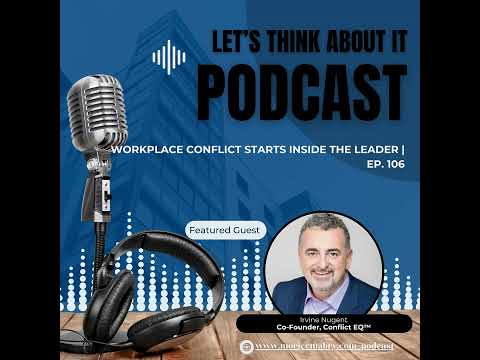
Stop Avoiding Conflict: How to Handle Difficult Conversations - Dr. Irvine Nugent, CSP
Dr. Irvine Nugent joins Jon S. Rennie on the Deep Leadership podcast for a practical conversation about workplace conflict, difficult conversations, and what leaders can do when tension begins to rise.
Conflict is a normal part of leadership. Different priorities, perspectives, expectations, and personalities inevitably create friction. The challenge is not eliminating that friction. It is developing the capacity to stay engaged and respond constructively when conflict begins affecting what we notice, assume, say, and do.
In this episode, Irvine draws on his experience growing up during the Troubles in Northern Ireland, his years as an organizational leader, and his current work with leaders and teams to explain why conflict avoidance can feel protective in the short term while allowing tension to grow over time.
The conversation also explores why simply “staying calm” is not enough. Leaders need to understand their own triggers, recognize what is happening internally under pressure, slow down their reactions, and remain connected enough to hear what the other person is actually saying.
Topics Explored
Why leaders avoid difficult conversations
Why conflict is a normal part of leadership
Constructive versus destructive conflict
How unresolved conflict grows over time
What happens emotionally and cognitively when pressure rises
Why staying calm is not the same as responding effectively
How leaders can recognize their conflict triggers
Preparing for difficult conversations
Why slowing down can prevent escalation
The importance of helping people feel heard
Why leaders should address workplace conflict earlier rather than waiting
How conflict can become a source of learning, creativity, and stronger decision-making
These themes closely reflect the episode notes published by Deep Leadership.
Questions Explored in This Conversation
Why do leaders avoid difficult conversations?
Leaders often avoid difficult conversations because they are concerned about escalation, damaging an important relationship, or making the situation worse. Avoidance can create short-term comfort, but unresolved tension usually remains and can become more difficult to address later.
Is conflict always bad for a team?
No. Conflict is a normal result of people bringing different perspectives, priorities, experiences, and ideas to their work. When handled constructively, those differences can contribute to better decisions, creativity, and stronger working relationships.
Why can unresolved conflict become more difficult over time?
Issues that are repeatedly avoided rarely disappear. People may begin forming stronger assumptions, frustration can accumulate, and trust may erode. Addressing tension earlier generally gives leaders more options than waiting until the conflict has intensified.
What happens to leaders when conflict creates pressure?
Conflict can affect attention, emotional reactions, assumptions, and behavior. Leaders may become more defensive, withdraw, rush to solve the problem, or focus narrowly on their own interpretation of what is happening.
Is staying calm enough during a difficult conversation?
Not necessarily. A leader may appear calm while internally becoming rigid, disengaged, or focused on defending a position. Effective conflict leadership also requires curiosity, awareness, listening, and the ability to remain constructively engaged.
How can leaders recognize their conflict triggers?
Leaders can begin by noticing patterns: the people, situations, words, behaviors, or perceived threats that reliably generate a strong reaction. Emotional and physical signals can provide early clues that a leader is becoming activated.
Why does slowing down help during conflict?
Slowing down creates space between the initial reaction and the response that follows. That additional space can help a leader listen more carefully, test assumptions, and choose what to say next rather than reacting automatically.
What makes people feel heard during conflict?
Feeling heard does not require agreement. It means the other person experiences that their perspective has been listened to, understood, and taken seriously before the conversation moves toward decisions or solutions.
About Dr. Irvine Nugent
Dr. Irvine Nugent, CSP, is a workplace conflict keynote speaker, executive coach, workplace mediator, and co-founder of Conflict EQ®.
His work helps leaders understand what conflict does to them before they realize it and strengthen their ability to remain grounded, clear, and constructive when tension rises.
Through speaking, training, coaching, and conflict interventions, Irvine works with leaders and organizations navigating workplace conflict, difficult conversations, team tension, and leadership pressure.