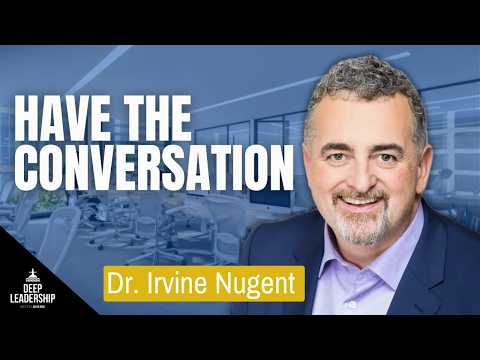
Why Conflict Isn’t a Problem to Fix | Dr. Irvine Nugent
Dr. Irvine Nugent joins Daria Rudnik on the Built by People Leaders podcast to discuss why conflict at work isn't necessarily a sign that something has gone wrong.
Different perspectives, priorities, expectations, and opinions naturally create tension. The challenge is whether leaders and teams have the capacity to work through that tension without losing clarity, trust, or connection.
In this conversation, Irvine explores why some leaders avoid difficult conversations while others become overly aggressive, and why both responses can create problems as organizations grow.
They also discuss what happens when HR becomes the default referee for workplace conflict, why apparently calm teams may still be avoiding important conversations, and how emotional awareness gives leaders more choice when pressure rises.
Topics include:
Why workplace conflict is inevitable
Conflict avoidance and aggressive responses
Building Conflict Capacity™ in leaders and managers
Why HR shouldn't have to resolve every interpersonal conflict
Emotional intelligence during difficult conversations
Recognizing personal conflict triggers
Giving difficult feedback to senior leaders
Creating teams where disagreement can happen without damaging relationships
Dr. Irvine Nugent, CSP, is a keynote speaker, executive coach, workplace mediator, and co-founder of Conflict EQ®. His work focuses on helping leaders build Conflict Capacity™: the ability to remain grounded, clear, and constructive when tension and pressure rise.
Questions Explored in This Conversation
Is conflict at work always a problem?
No. Workplace conflict is a natural result of people having different perspectives, priorities, needs, and expectations. The greater risk is often not the presence of conflict, but whether people have the capacity to respond to it constructively.
Why do leaders avoid difficult conversations?
Leaders may avoid conflict because they want to protect relationships, fear making the situation worse, or feel uncertain about how the other person will respond. Avoidance can provide short-term relief, but unresolved issues often become harder to address over time.
What is Conflict Capacity™?
Conflict Capacity is the ability to remain grounded, engaged, and constructive when disagreement, tension, or pressure rises. It helps leaders stay in the conversation rather than automatically avoiding, escalating, or shutting down.
What role should HR play in workplace conflict?
HR has an important role in serious or complex workplace issues, but it shouldn't have to become the referee for every disagreement. Organizations can strengthen their culture by helping leaders and employees develop the skills and confidence to address appropriate conflicts themselves.
How does emotional intelligence help during conflict?
Emotional intelligence helps people recognize what is happening within themselves and others when tension rises. That awareness creates more opportunity to choose a constructive response rather than simply reacting.
Featured on: Built by People Leaders with Daria Rudnik